Need help?
UK Customer Services0330 880 3600*
Open Monday to Friday 9:00am to 5pm, Saturday 8:30am to 4pm and closed Sundays.
*Calls are recorded for training and quality purposes.
Go back to:
All Country Guides
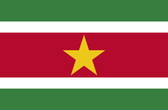
Suriname
Please note that if the Foreign, Commonwealth and Development Office have advised against all (or all but essential travel) to your destination, we cannot provide cover.
Click here to visit the FCDO's Foreign Travel Advice webpage.
- Intro
- Geography
- Travel
- Embassies & Visas
- Currency
- Health
Quick Facts
Official name: Republic of Suriname
Capital city: Paramaribo
Languages spoken: Dutch, Sranan Tongo, Hindi, Javanese
Population: Around 630,000
Currency: Surinamese dollar (SRD)
Time zone: GMT-3
Driving side: Left
Climate: Tropical, hot and humid year-round with rainy seasons from April to July and November to February
Suriname, tucked on South America’s northeast coast, is a small but culturally diverse nation where South American, Caribbean, Asian, and Dutch influences all converge. The capital, Paramaribo, is a UNESCO World Heritage site filled with Dutch colonial wooden architecture, while the country’s interior is dominated by pristine rainforest. Suriname is popular with travellers seeking eco-tourism, river adventures, and cultural immersion in a unique, multicultural society.
Travellers should be aware that political demonstrations sometimes occur in Paramaribo, occasionally causing disruption. While these are usually peaceful, they can turn unpredictable. Infrastructure outside the capital is limited, and road travel into the interior can be challenging. Visitors are advised to plan journeys carefully and avoid large gatherings.
Suriname shares borders with Guyana to the west, French Guiana to the east, and Brazil to the south, with the Atlantic Ocean to the north. Much of the country is covered by dense tropical rainforest, home to rare wildlife and Indigenous communities. The coastal region holds most of the population, while the interior remains remote and sparsely populated. The Suriname River and Brokopondo Reservoir are key features of the landscape.
Johan Adolf Pengel International Airport (PBM) is the main gateway, about 45 km from Paramaribo. Domestic flights and riverboats are often used to access interior regions, as road networks are limited. Popular experiences include jungle tours, birdwatching, and visiting Maroon and Indigenous villages. In Paramaribo, travellers can explore markets, mosques, synagogues, and colonial churches side by side, reflecting the country’s religious and cultural diversity.
UK nationals need a visa or tourist card to enter Suriname, which should be obtained online in advance. Passports must be valid for at least six months on arrival. The British Embassy in Suriname is represented through the British Embassy in neighbouring Guyana, meaning in-country consular assistance is limited.
The official currency is the Surinamese dollar (SRD). Cash is essential in many places outside Paramaribo. ATMs exist in cities but may not always be reliable. Credit cards are accepted in some hotels and restaurants but are far from universal. Travellers should carry a supply of US dollars or euros as they are often preferred for exchange.