
Need help?
UK Customer Services0330 880 3600*
Open Monday to Friday 9:00am to 5pm, Saturday 8:30am to 4pm and closed Sundays.
*Calls are recorded for training and quality purposes.
Go back to:
All Country Guides
Other Guides
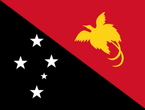
Papua New Guinea
Please note that if the Foreign, Commonwealth and Development Office have advised against all (or all but essential travel) to your destination, we cannot provide cover.
Click here to visit the FCDO's Foreign Travel Advice webpage.
- Intro
- Geography
- Travel
- Embassies & Visas
- Currency
- Health
Quick Facts
Official name: Independent State of Papua New Guinea
Capital city: Port Moresby
Languages spoken: English, Tok Pisin, Hiri Motu, plus hundreds of indigenous languages
Population: Around 10 million
Currency: Papua New Guinean kina (PGK)
Time zone: GMT+10
Driving side: Left
Climate: Hot and humid year-round with a wet season from December to March; cooler in the highlands
Papua New Guinea is one of the most culturally diverse countries in the world, with more than 800 languages spoken. Its rugged terrain, remote villages, and rich tribal traditions make it fascinating but also challenging for visitors. While tourism exists, especially for diving, trekking, and cultural festivals, travel can be unpredictable due to limited infrastructure and security concerns.
The country occupies the eastern half of New Guinea island, along with numerous smaller islands in the Pacific. It is dominated by mountains, dense rainforests, and extensive river systems. Volcanoes and frequent earthquakes shape the landscape, while coral reefs and marine biodiversity make its waters among the most impressive in the world.
Jacksons International Airport in Port Moresby is the main gateway, with flights mainly from Australia and other Pacific nations. Domestic flights are often the only practical way to reach many towns due to the limited road network. Travel outside major centres requires careful planning, and local security issues mean independent travel should be approached with caution.
UK citizens require a visa to enter Papua New Guinea, which can usually be obtained online before travel. A valid passport and proof of onward or return travel are required. The British High Commission is in Port Moresby, offering limited consular support.
The Papua New Guinean kina (PGK) is the official currency. ATMs are available in cities but scarce elsewhere. Credit cards are accepted in hotels and larger businesses, though cash is essential in rural areas.
Healthcare facilities are limited outside Port Moresby, and serious cases often require evacuation. Malaria is widespread, and other mosquito-borne diseases such as dengue also occur. Travellers should use insect repellent, sleep under nets, and take antimalarial medication. Tap water is generally unsafe to drink, so bottled or boiled water is advised. Comprehensive travel insurance, including medical evacuation, is essential.


