Need help?
UK Customer Services0330 880 3600*
Open Monday to Friday 9:00am to 5pm, Saturday 8:30am to 4pm and closed Sundays.
*Calls are recorded for training and quality purposes.
Go back to:
All Country Guides
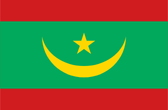
Mauritania
Please note that if the Foreign, Commonwealth and Development Office have advised against all (or all but essential travel) to your destination, we cannot provide cover.
Click here to visit the FCDO's Foreign Travel Advice webpage.
- Intro
- Geography
- Travel
- Embassies & Visas
- Currency
- Health
Quick Facts
Official name: Islamic Republic of Mauritania
Capital city: Nouakchott
Languages spoken: Arabic, French, Pulaar, Soninke, Wolof, Hassaniya Arabic
Population: Around 4.5 million
Currency: Ouguiya (MRU)
Time zone: GMT+0
Driving side: Right
Climate: Hot and dry, with desert conditions dominating; coastal areas are milder but still arid
Mauritania, located in northwest Africa, bridges the Arab Maghreb and sub-Saharan Africa. Much of the country is desert, with nomadic traditions still part of daily life, although urbanisation is growing. It is known for its stark Saharan landscapes, traditional caravan routes, and historic trading towns like Chinguetti.
The political and security situation can be unstable, especially in border regions, where risks of terrorism and banditry exist. Travellers are strongly advised to stay updated with the latest FCDO travel advice before visiting.
Mauritania is dominated by the Sahara Desert, with vast sand dunes, rocky plateaus, and isolated oases. The Senegal River forms part of the southern boundary, while the Atlantic coastline stretches for over 700 km. The country’s geography is harsh but striking, offering remote beauty and historic caravan towns.
Nouakchott International Airport handles limited international flights, mainly to nearby African and European hubs. Roads are basic, with desert travel requiring 4x4 vehicles, local knowledge, and careful preparation. Railways are used mostly for freight, including the famous iron ore train, which adventurous travellers sometimes ride.
UK citizens and most other nationals require a visa to enter Mauritania. Visas are available on arrival at Nouakchott Airport and some land borders, though requirements may change. The UK does not have a resident embassy in Mauritania; consular support is provided through the British Embassy in neighbouring countries.
The ouguiya (MRU) is the national currency. ATMs are limited outside Nouakchott and Nouadhibou, and cash is essential in rural areas. Credit card use is minimal, so travellers should plan to carry sufficient local currency.
Healthcare facilities are basic, especially outside the capital. Emergency treatment and supplies are limited, so medical evacuation insurance is vital. Vaccinations for yellow fever, hepatitis A, and typhoid are recommended, and malaria is a risk in southern regions. Tap water is not safe to drink, so bottled or treated water is essential.