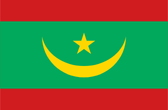
| Ruling military junta release former president from house arrest |
| 13 Nov 2008 |
| On 13 November 2008 the ruling military junta released former president Sidi Abdallahi from house arrest where he had been held since the August 2008 coup that toppled his government. Sources indicated that the president is currently in his hometown of Lemden, located south of the capital, and remains under surveillance. The ruling military junta had been facing mounting local and international pressure to release the former president, including a recent deadline set for his release by the European Union. Upon his release, Abdallahi stated that he considers himself the rightful president of Mauritania.
|
| Security forces clash with anti-coup protesters in Nouakchott |
| 08 Oct 2008 |
| Security forces clashed with anti-coup protesters in the capital, Nouakchott, on 7 October 2008, the second such incident since 5 October. Police used tear gas and beat union members who had gathered at a local market in the downtown area to protest the ruling military junta that took power in August 2008. At least two people were injured in the incident. Unions organized the protest despite a recent decree banning all protests and demonstrations in the country. Another anti-coup protest was held on 5 October and also resulted in clashes with police who attempted to break up the demonstration.
The military junta led by Gen. Mohammed Abdelaziz took power in a coup in August 2008, ousting the country's first democratically elected government and detaining President Sidi Abdallahi, who remains under house arrest. The junta has promised to hold free and transparent elections but no exact date has been set for the vote.
|
| Security forces used tear gas to break up an anti-coup protest |
| 06 Oct 2008 |
| On 5 October 2008 Mauritanian security forces used tear gas to break up an anti-coup protest. The National Front for the Defense of Democracy called for the protest although the military junta that recently took power has banned demonstrations. Several dozen people joined the protest in Nouakchott, chanting slogans in support of the recently ousted president, who remains under house arrest. Several participants were injured when police officers intervened to break up the rally. Demonstrators stated that leaders of the anti-coup groups will assemble on 6 October between the hours of 1600 and 1900 UTC at 12 locations to speak about the current situation |
| Alliance of political parties call for a national anti-coup demonstration |
| 03 Oct 2008 |
| An alliance of political parties in Mauritania called for a national anti-coup demonstration to be held on 4 October 2008 to demand that the military junta, which took control in a 6 August coup, return the country to constitutional rule. Representatives of the National Front of Defense and Democracy (FNDD) stated that the protest action intends to show the ruling junta that the Mauritanian people are in agreement with international organizations such as the United Nations, European Union and the African Union, which have all called for the restoration of power to deposed President Sidi Abdallahi.
In response to the planned protest, junta officials announced that all demonstrations will be banned in the country. Prime Minister Moulaye Leghdaf stated in a radio interview that all demonstrations, including pro-junta gatherings, will be made illegal throughout the nation.
The ruling military junta has promised to hold new elections but has not specified a date for the vote. The African Union recently presented the Mauritanian junta a deadline of 6 October to return the country to constitutional rule. Gen. Mohammed Abdelaziz immediately rejected the ultimatum. However, Prime Minister Leghdaf has indicated that he will travel to Brussels to meet with European Union officials on 10-15 October to discuss and assess the situation in Mauritania |
| Mauritanian security forces re-arrested ousted Prime Minister |
| 22 Aug 2008 |
| Mauritanian security forces re-arrested ousted Prime Minister Yahya Ould Ahmed Waghf on 21 August 2008, after he led a major anti-coup rally on 20 August in Nouakchott, the capital. Waghf was reportedly detained while en route to another planned demonstration in the northern port of Nouadhibou. The 20 August march was the largest since the 6 August coup ousted President Sidi Ould Cheikh Abdallahi. Waghf was arrested just nine days after his release by the military junta following his previous detention as part of the coup led by Gen. Mohamed Ould Abdelaziz.
|
| Military Junta release Prime Minister |
| 12 Aug 2008 |
| The newly established military junta released Prime Minister Yahya Ould Ahmed Waghf and three other top government officials on 11 August 2008 in what coup leaders called a conciliatory gesture. However, military officials stated that there are no immediate plans to release President Sidi Ould Cheikh Abdallahi who has been held at an undisclosed location since the 6 August coup led by Gen.Mohamed Ould Abdelaziz. There were unconfirmed reports that the release comes after an envoy of ambassadors from the United States, France, Germany and Spain met with junta leader to demand the release of the government officials.
International pressure continued to mount against the coup as France announced a freeze on non-humanitarian aid to Mauritania on 11 August, a step that the United States had taken earlier. The assistance package will not include humanitarian aid. The European Union has also threatened to withdraw aid. The move also follows the African Union's 9 August suspension of Mauritania's membership to the organization.
|
| New presidential elections will occur in the near future? |
| 07 Aug 2008 |
| On 7 August 2008 the leaders of a military coup that ousted President Sidi Ould Cheikh Abdallahi from power announced that new presidential elections will occur in the near future. The presidential guard chief, Mohammad Ould Abdelaziz, the person responsible for staging the coup, has set up a council containing 11 members who will rule the nation. The coup began after the president attempted to dismiss four senior army officials.
The situation remains relatively calm throughout Nouakchott. Approximately 50 demonstrators protested against the decision made by the presidential guard to reverse the president's decision to dismiss the four officials; however, they were easily controlled by tear gas fired by troops.
International politicians pressured the council to release the president and return him to power. However, the council has refused to do so and has gained support from local politicians, who have scheduled a march for 7 August.
|
| President held in bloodless coup |
| 06 Aug 2008 |
| Early on 6 August 2008 a group of soldiers detained Mauritanian President Sidi Ould Cheikh Abdallahi and Prime Minister Yahya Ould Ahmed Waghf in an apparent bloodless coup; Waghf is reportedly now being detained at an army barracks facility, and Abdallahi is reportedly under house arrest at the presidential palace. There have been no reports of unrest, and the coup was conducted without any violence.
At this point, the situation in Mauritania, and Nouakchott specifically, is said to be calm, and there is a heavy security presence on streets. Confirmed reports indicate that Nouakchott International Airport (GQNN/NKC) is currently closed; the facility will likely remain inoperational at least until 8 August. It is not known if any roads leading to and from the capital are closed. It is possible that movement may be restricted to some extent, although the latest reports from the ground indicate that day-to-day activities are continuing largely as usual. State radio and television outlets were taken off the air shortly before the coup began and have not resumed broadcasting.
The coup comes amid a recent political crisis in the country, as the Cabinet was reshuffled several weeks ago following a vote of no confidence. At some point in the past several days, the president replaced several military generals who had reportedly been "stirring up the political crisis." The coup occurred almost immediately following the announcement that at least two high-ranking military officials had been replaced; at least one of the replaced officials (reportedly the former head of the presidential guard) was a key leader of the coup. The coup leaders have already announced a new junta to lead the country.
|
| FCO - Travel Advice |
| 14 Jul 2008 |
| We advise against all but essential travel to the regions east of Zouerate, Ouadane, Tichit and Oualata, because of the risk of banditry, and the activities of armed smugglers and extremist groups.
Travel in Mauritania can be difficult and conditions are poor for overland travel. You should take all necessary steps to protect your safety, especially outside of main urban areas,and you should have confidence in your individual security arrangements. You should also mainatain a high level of vigilance, particularly in public places and take sensible precautions for your personal and vehicle safety. |