Need help?
UK Customer Services0330 880 3600*
Open Monday to Friday 9:00am to 5pm, Saturday 8:30am to 4pm and closed Sundays.
*Calls are recorded for training and quality purposes.
Go back to:
All Country Guides
Other Guides
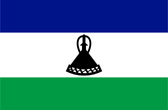
Lesotho
Please note that if the Foreign, Commonwealth and Development Office have advised against all (or all but essential travel) to your destination, we cannot provide cover.
Click here to visit the FCDO's Foreign Travel Advice webpage.
- Intro
- Geography
- Travel
- Embassies & Visas
- Currency
- Health
Quick Facts
Official name: Kingdom of Lesotho
Capital city: Maseru
Languages spoken: Sesotho, English
Population: Around 2.3 million
Currency: Lesotho loti (LSL), South African rand (ZAR) also accepted
Time zone: GMT+2
Driving side: Left
Climate: Highland climate with hot summers, cold winters, and a chance of snow at higher altitudes
Lesotho, often called the “Kingdom in the Sky,” is a landlocked nation entirely surrounded by South Africa. Known for its dramatic mountain landscapes, it’s one of the few countries in the world entirely above 1,000 metres in elevation. Visitors can experience Basotho culture, pony trekking, hiking through rugged terrain, and the striking Maletsunyane Falls. Maseru is the political and economic centre, while the countryside showcases the true character of the nation.
Lesotho is dominated by the Maloti Mountains and high plateaus, with the Drakensberg range forming its eastern border. The country’s altitude gives it cooler temperatures than much of southern Africa. Winters (June to August) can bring snow, especially in the mountains, while summers (December to February) are warm with afternoon thunderstorms.
Maseru Moshoeshoe I International Airport connects Lesotho with Johannesburg, South Africa. Overland entry is common, with several road crossings from South Africa. While main roads are paved, many rural routes require a 4x4 vehicle. Public transport mainly consists of minibuses and shared taxis, though travel times can be unpredictable.
UK nationals need a visa to enter Lesotho, but short-stay visas can often be obtained on arrival. Passports must be valid for at least six months. For longer visits, visas should be arranged in advance. The British High Commission in Maseru provides consular support.
The local currency is the Lesotho loti (LSL), but the South African rand (ZAR) is legal tender and widely used. Credit cards are accepted in larger hotels and businesses, though cash is often required in rural areas. ATMs are available in towns and cities.
Healthcare is limited outside the capital, with serious medical issues often requiring evacuation to South Africa. Maseru has hospitals and clinics offering reasonable standards of care, but rural facilities are basic. Comprehensive travel insurance including medical evacuation is strongly recommended. Tap water is not always safe, so bottled water is advisable.