Contact Us   |   FAQ   |   Site Map
Direct Travel Insurance
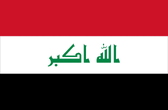
Iraq flag Iraq
Formerly part of the Ottoman Empire, Iraq became an independent kingdom in 1932. A "republic" was proclaimed in 1958, but in actuality a series of military strongmen have ruled the country since then, the latest being SADDAM Husayn. Territorial disputes with Iran led to an inconclusive and costly eight-year war (1980-1988). In August 1990 Iraq seized Kuwait, but was expelled by US-led, UN coalition forces during January-February 1991. The victors did not occupy Iraq, however, thus allowing the regime to stay in control. Following Kuwait's liberation, the UN Security Council (UNSC) required Iraq to scrap all weapons of mass destruction and long-range missiles and to allow UN verification inspections. UN trade sanctions remain in effect due to incomplete Iraqi compliance with relevant UNSC resolutions.
In the year since the fall of Saddam Hussein’s regime and the beginning of the Coalition occupation, there has not been a significant improvement in the overall security situation. Over 600 U.S. and coalition soldiers have been killed in hostile attacks since May 1 2003, with an uncounted number of Iraqi bystanders killed or injured in the attacks. Non-combatants expatriates have also fallen the victims of the often indiscriminant bomb and rocket-propelled-grenade (RPG) attacks. Terrorists have lunched planned deliberate attacks against a foreign targets in Baghdad, including embassies, hotels and UN offices Despite the December 2003 capture of Saddam Hussein, almost daily insurgent attacks continue to occur against U.S. and coalition soldiers, Iraqi police and in some cases, against non-combatant contractors, aid workers and Iraqi political figures. Attacks have occurred with particular frequency in and around Baghdad, further to the west around the city of Fallahjah, where 4 US contractors were murdered and mutilated in April 2004, and in the areas to the north up to and beyond the city of Takrit. Also in April 2004, Shiite insurgents launched attacks on coalition forces in southern areas of the country. Meanwhile, crime and outright banditry has risen almost unchecked throughout the country, despite the reinstatement and return to duty of nearly 35,000 Iraqi police officers. Looting, carjackings, and robberies are a daily fixture in Baghdad. Domestic disputes and the settling of “old score” have also left many Iraqis dead or hospitalized. Highway robberies along major arteries like Highway Two between Baghdad and the Jordanian border continue to occur frequently. With Baghdad’s airport still closed to commercial traffic, Highway Two remains a lifeline to the outside world for the city. Though the road has long had its dangers, the fall of Saddam Hussein and now guerrilla war between shadowy militants and thinly spread U.S. forces has unleashed a crime wave along the road. Despite excited talk in the airline industry, officials say there is little prospect of Baghdad airport reopening any time soon -- partly due to a risk from anti-aircraft missiles. While the majority of ordinary Iraqis are not inherently hostile to the US/British-led occupation forces, many are rapidly losing patience with the US-led Interim Administration’s inability to reliably restore basic services like electricity and water. Iraqis, like many Arabs believe that if they wanted to, the Americans could complete the reconstruction with a snap of their fingers. With perhaps unrealistically high short-term expectations on the part of many Iraqis, there is a very real prospect for growing rather than diminishing resistance to the Coalition. Iraq’s interim Governing Council held its first meeting in July 2003. Paul Bremer, the head of the US Administration in Iraq, appointed its 25 members. They broadly reflect Iraq's ethnic make-up. The council can appoint ministers and pass the budget, but ultimate control of Iraq rests with the US administrator. Political Assessment In the Middle Ages Iraq was the center of the Islamic Empire, with Baghdad the cultural and political capital of an area extending from Morocco to the Indian subcontinent. Mongol invasions in the 13th century saw its influence wane, and it played a minor role in the region until it was wrested from the Ottoman Empire at the close of World War I and gained independence from British control in 1932. A republic was proclaimed in 1958 after King Sharif Ali Bin al-Hussein was deposed, but in actuality a series of military strongmen ruled the country since then, the latest being Saddam Hussein. Iraq’s attempt to seize disputed border areas from Iran resulted in the inconclusive and costly eight-year Iran-Iraq war (1980-88). In August 1990, Iraq seized Kuwait, but was expelled 7 months later by US-led, UN Coalition forces during the Gulf War of January-February 1991. Following Kuwait's liberation, the UN Security Council (UNSC) required Iraq to scrap all weapons of mass destruction and long-range missiles and to allow UN verification inspections. Continued Iraqi noncompliance with UNSC resolutions during the past 12 years resulted in the US-led invasion of Iraq in March 2003 and the ouster of the Saddam Hussein regime. Coalition forces remain in Iraq, helping to restore degraded infrastructure and facilitating the establishment of a freely elected government. After experiencing major wars in each of 3 decades (1980-88, 1990-91, 2003), as well 12 years of UN economic sanctions the country's economy, infrastructure, and society are in disarray. Currently, Iraq is governed by a US-led administration headed by American career diplomat and former US Special Ambassador for Counter-Terrorism Paul Bremer. Bremer is the top civilian official in Iraq and is responsible for overseeing reconstruction efforts and the political transformation of the country. While there is no clear timetable for a handover to Iraqi rule, an interim governing council held its first meeting in July 2003. Its 25 members were appointed by Bremer and broadly reflect Iraq's ethnic make-up. The council can appoint ministers and pass the budget, but ultimate control of Iraq rests with the US administrator. Bremer has said the Iraqi constitution should be rewritten to allow democratic elections to take place. Bremer’s stated priorities are to restore law and order and to stimulate the moribund economy. However the slower than expected restoration of the delivery of reliable basic services such as food, water and sewage, electricity, and healthcare may be undermining both these priorities. Recently, several days of electric outages in the comparatively placated southern city of Basra led to widespread protests against British forces. In fact, the Basra unrest prompted Kuwait to temporarily close its border with Iraq over security concerns. After nearly 50 years of stifling control by Iraq’s Baathist Party, there is currently no nationwide alternative for building a cohesive government. Over the longer term, finding a way to unit an ethnically and religiously disparate country, with a recent past of harsh repression, will be a daunting task, and there are pitfalls with working with any group. Without going into a detailed analysis of a fluid situation, below is an outline of the current power blocks vying for influence in postwar Iraq: Sunni Sunni Moslems (from the Western standpoint the conservative Moslems) have ruled Iraq for 700 years. In fact at the time of independence from Briton in 1932, they were likely the majority. Demographics have change and the Sunnis are now minority group. Saddam Hussein is/was a Sunni. The Sunni population occupies a swath of Iraq which is essentially Baghdad, 100 miles south of Baghdad, and 200 miles north of Baghdad. After their many years of rule, they are rightfully fearful of the prospect of a democracy under which they may become the oppressed people. Shiites Shiite Moslems represent the majority group in Iraq. Most are native to Iraq, but others emigrated from Iran, either to escape the Shah or to escape the Ayatollahs. Oppressed by Saddam Hussein, in their view betrayed by the U.S. in 1991 during their uprising and heavily influenced by Iran’s conservative religious leaders, they are trump card in democratic Iraq. Kurds A group oppressed by the successive Iraq regimes, Coalition forces at the beginning of the war embraced the Kurds. The minority Kurds remain divided among themselves and are unlikely to extend any lasting influence on the country as a whole outside their northern strongholds. In addition the Iraqi Governing Council -- 22 men and three women, most of whom opposed Saddam from exile -- is seen in Washington as a first step toward a democratic government in Iraq following the war to topple former President Saddam Hussein. Its members include most of those noted above as well as the following members: While it remains to be seen how many, if any, of the Governing Council members will go on to play a role in post-elections Iraq, it is likely that their influence will be felt for some time to come. In mid-August the U.N. Security Council adopt a resolution welcoming creation of Baghdad's new Governing Council, but Syria has decided to abstain, council diplomats said. The U.S.-drafted measure also gives an initial 12-month mandate to the new U.N. Assistance Mission for Iraq, which has been operating on emergency funding until now. The formal mandate would allow it to be funded via the regular U.N. budget. Meanwhile, Arab states have said they will deal with the Governing Council, but will not recognize it as a legitimate government. Security Assessment Currently there are some 148,000 U.S. service members and more than 13,000 Coalition troops from 19 countries serving in Iraq. Establishing a secure environment and bringing the law and order situation under control is the greatest task current facing the Coalition forces in Iraq. While there are signs that the security situation is improving, remnants of Saddam Hussein’s former Baath regime, transnational terrorists, and criminal elements remain active in Iraq, particularly in and around Baghdad and Iraq’s central region. Coalition-led military operations continue, but troops are thinly spread and there are daily attacks against Coalition forces throughout the country. Attacks have been concentrated in Baghdad, Fallujah, Ramadi, Tikrit, Bayji, Baqubah and to a lesser extent in the Mosul and Kirkuk areas, but the security environment in all of Iraq remains volatile and unpredictable. Falujah is especially dangerous, though a pilot U.S. program to provide cash payments to families of Iraqis killed by Coalition forces by accident has helped to ease tensions since the beginning of August. The Basra region, where 500 local police have been patrolling since June, and the south were reasonably quiet until electrical power outages prompted protests against British troops on the weekend of August 9-10. The unrest led to several deaths and prompted Kuwait to temporarily close its border with Iraq. With the restoration of power, the protests have ceased, but the area remains tense and illustrates the unpredictable nature of the security situation throughout the country. In sparsely populated rural areas banditry rather than insurgent activity has sprung-up as the major concern. Bandits armed with automatic rifles ply many isolated roads seeking travelers for robberies, and in some cases carjackings. Early in the occupation, insurgent attacks on Coalition forces as well as civilian targets usually occurred during the late evening and early morning hours. However, in recent weeks there has been a growing trend toward daylight insurgent attacks. The assumption is that the insurgents believe Coalition patrols will be lighter during the hot afternoon hours, when the temperature now routinely approaches 120 Degrees Fahrenheit. The majority of attacks by insurgents have been against Coalition military patrols and convoys. This is likely because the forces are by far the largest and most visible expatriate presence in the country. It is however unlikely that the insurgents would hesitate the targeting of expatriate non-combatants should such softer targets present themselves. Also the indiscriminant nature of the attacks make it likely that civilian personnel (expatriate and Iraqi alike) can fall victim of attacks by being in the wrong place at the wrong time. Scores of Iraqi civilians bystanders and police have also died in the insurgent attacks. On August 5, an American civilian contractor was killed when a remote-control bomb exploded under the truck he was driving north of Tikrit. The contractor was employed by Kellogg Brown & Root, a subsidiary of Halliburton, a Houston-based oilfield-services and construction company. It is unlikely the victim was specifically targeted as he was traveling in a 5-vehicle convoy escorted my military forces. Nevertheless, it illustrates the point of the extreme dangers faced by all expatriates in Iraq. In an obviously more deliberate attack, on July 22 a Sri Lankan staff member with the International Committee of the Red Cross (ICRC) was killed and one of its drivers wounded in a shooting south of Baghdad. Their vehicle came under fire near the town of Hilla. The Swiss-based humanitarian agency said that the vehicle was clearly marked with the ICRC red emblems. Also near Hilla, on July 20 an Iraqi driver for the United Nations was killed and a foreign staffer injured when their vehicle crashed into a bus after being hit by gunfire from an overhead pass. The vehicle was traveling in a 2-car convoy and was clearly marked with the UN logo. Meanwhile, the August 7th bomb attack against the Jordanian Embassy in Baghdad that killed 17 people may herald a new dimension to the situation. Most of the attacks against Coalition forces are assumed to be the work of die-hard regime loyalists, however the attack on the Jordanian Embassy bears all the hallmarks of an Islamic extremist attack. Islamic extremist groups have long favored Jordanian targets. U.S. and Jordanian intelligence officials suspect that Imad Mugniyah -- suspected in the Beirut bombings in the early 1980s -- may have masterminded the embassy attack. The officials also think that Mugniyah may have joined forces with an al-Qaida suspect, Abu Mussab al Zarqawi, to threaten U.S. troops in Iraq. Officials say Mugniyah, a Lebanese Shiite Muslim, runs the international terrorist apparatus of Lebanese Hizballah and that he works as a subcontractor for Iranian intelligence, often using Iran as a safe haven. Zarqawi is a Sunni Muslim suspected of directing an al-Qaida-affiliated terror network stretching from the Middle East to Europe. Both men are at the top of the FBI’s most wanted terrorists list. While it remains clear who is behind the insurgent attacks, the general assumption is that Saddam loyalist have carried out most of the attacks against Coalition targets. After the collapse of the regime, the Coalition ordered the Iraqi military disbanded; as a result over 250,000 soldiers were demobilized in Baghdad and the central regions of Iraq. While most of the soldiers have likely found the way home and resumed their civilian lives, a large number of die-hards have likely formed insurgent cells or drifted into crime. Former regime members, particularly those from Saddam’s security apparatus, likely have little future in a free Iraq, and therefore have a strong motivation in keeping the country destabilized in the hopes of maneuvering their way back to power. Meanwhile, an estimated 4,000-6,000 foreign extremist “volunteers” entered Iraq shortly before the outbreak of hostilities. Most of these returned home disillusioned by the quick fall of the Iraqi regime, but a number likely have remained in the country or have returned. These volunteers generally hold intense anti-American sentiments and the availability of relatively unprotected U.S. targets in the still chaotic country presents an inviting opportunity. The number of foreign fighters and the extent in their involvement in the attacks is open to speculation. To date authorities have yet to put any captured foreign fighters on display. Despite Coalition efforts to disarm Iraqi citizens, weapons of every kind are widely available in Iraq. In addition to AK-47 assault rifles, the weapons of choice for attacks against the Coalition forces have been rocket-propelled grenades (RPGs), landmines and improvised explosive devices (IEDs). The IEDs are often made from unexploded artillery shells, which are widely available, and are placed near roads or overpasses to be detonated remotely as targeted vehicles pass. Sniper attacks against patrols and vehicles do occur, but Coalition efforts to seal off and contain areas after an attack appear to be deterring gunmen, whose chances of escape after carrying out a sniper attack have diminished. Despite the gloomy security situation, there are signs the Coalition forces are making progress. New Iraqi army and police forces are being