Need help?
UK Customer Services0330 880 3600*
Open Monday to Friday 9:00am to 5pm, Saturday 8:30am to 4pm and closed Sundays.
*Calls are recorded for training and quality purposes.
Go back to:
All Country Guides
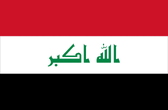
Iraq
Please note that if the Foreign, Commonwealth and Development Office have advised against all (or all but essential travel) to your destination, we cannot provide cover.
Click here to visit the FCDO's Foreign Travel Advice webpage.
- Intro
- Geography
- Travel
- Embassies & Visas
- Currency
- Health
Quick Facts
Official name: Republic of Iraq
Capital city: Baghdad
Languages spoken: Arabic, Kurdish, Turkmen, Assyrian
Population: Around 46 million
Currency: Iraqi dinar (IQD)
Time zone: GMT+3
Driving side: Right
Climate: Extremely hot summers and mild winters, with dry desert conditions dominating most of the country
Iraq, often referred to as the “cradle of civilisation,” is home to some of the world’s earliest cities and the rivers Tigris and Euphrates. Ancient sites like Babylon and Ur speak to its immense historical importance, while bustling Baghdad reflects both resilience and struggle. Today, however, Iraq faces serious challenges.
Political instability, the presence of armed groups, and the legacy of past conflicts mean that security risks remain very high. Bombings, kidnappings, and civil unrest continue to affect several regions, and the Foreign, Commonwealth & Development Office advises extreme caution. Despite these realities, Iraq’s cultural and religious heritage, from the holy cities of Najaf and Karbala to the mountainous Kurdish north, highlights its enduring importance to the region and the world.
Iraq is bordered by Turkey, Iran, Kuwait, Saudi Arabia, Jordan, and Syria. Much of the country is desert, but the fertile plains between the Tigris and Euphrates have supported civilisation for millennia. The rugged mountains of the Kurdish north contrast with the arid south, while the marshes of the southeast are a unique ecosystem. Earthquakes are possible in the northeast, and dust storms are common during the summer.
Baghdad International Airport is the primary entry point, though flights may be affected by regional instability. Domestic travel is challenging, with poor road conditions and significant security risks. In the Kurdish region, centred on Erbil and Dohuk, conditions are comparatively more stable and infrastructure better developed. Foreign visitors must remain alert to restrictions, curfews, and local regulations, and travel outside major urban areas is strongly discouraged without professional security arrangements.
Most travellers require a visa to enter Iraq, and requirements vary depending on whether they are visiting the Kurdish region or federal Iraq. UK citizens need a visa in advance. The British Embassy in Baghdad provides limited consular assistance due to security constraints, while a British consulate operates in Erbil.
The official currency is the Iraqi dinar (IQD). Credit card use is limited, and ATMs are not always reliable. Cash (preferably US dollars) is the most practical option for visitors, and currency should only be exchanged through licensed bureaux or banks.
Healthcare in Iraq is under severe strain, with facilities often lacking equipment and medicines outside major cities. Medical evacuation cover is essential for travellers. Water quality is unreliable; bottled water is strongly recommended. High levels of air pollution and frequent dust storms can exacerbate respiratory conditions.