Need help?
UK Customer Services0330 880 3600*
Open Monday to Friday 9:00am to 5pm, Saturday 8:30am to 4pm and closed Sundays.
*Calls are recorded for training and quality purposes.
Go back to:
All Country Guides
Other Guides
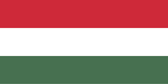
Hungary
Please note that if the Foreign, Commonwealth and Development Office have advised against all (or all but essential travel) to your destination, we cannot provide cover.
Click here to visit the FCDO's Foreign Travel Advice webpage.
- Intro
- Geography
- Travel
- Embassies & Visas
- Currency
- Health
Quick Facts
Official name: Hungary
Capital city: Budapest
Languages spoken: Hungarian
Population: Around 9.6 million
Currency: Hungarian forint (HUF)
Time zone: GMT+1
Driving side: Right
Climate: Warm summers and cold winters, with spring and autumn bringing mild, changeable weather
Hungary, landlocked in the heart of Central Europe, is known for its historic cities, spa culture, and sweeping plains. Budapest, its capital, straddles the Danube with dramatic bridges, thermal baths, and grand architecture. Beyond the capital, visitors can explore wine regions, medieval towns, and Lake Balaton, the largest lake in Central Europe.
Hungary is bordered by Austria, Slovakia, Ukraine, Romania, Serbia, Croatia, and Slovenia. The Great Hungarian Plain dominates the east, while the Transdanubian hills and the North Hungarian Mountains provide varied landscapes. The Danube and Tisza rivers cut through the country, shaping its geography and culture.
Budapest Ferenc Liszt International Airport is the main air gateway, with good rail and road connections across Europe. Hungary has a reliable train system, and buses serve towns not connected by rail. Driving is straightforward, but motorway tolls apply. Public transport in Budapest is efficient, with metro, trams, and buses widely used.
As a Schengen member, Hungary allows UK citizens and many other nationals to visit visa-free for up to 90 days in a 180-day period. Longer stays or work require a visa or residence permit. The British Embassy is located in Budapest.
The official currency is the Hungarian forint (HUF). While Hungary is part of the EU, it does not use the euro. ATMs are widely available, and cards are accepted in most urban areas, though smaller shops and rural businesses may prefer cash.
Hungary’s healthcare system is generally good, particularly in Budapest and larger cities. Pharmacies are common, and many doctors speak English. EU residents can access state-provided care with a GHIC/EHIC card, but comprehensive travel insurance is recommended to cover private treatment and medical evacuation.