Need help?
UK Customer Services0330 880 3600*
Open Monday to Friday 9:00am to 5pm, Saturday 8:30am to 4pm and closed Sundays.
*Calls are recorded for training and quality purposes.
Go back to:
All Country Guides
Other Guides
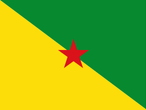
French Guiana
Please note that if the Foreign, Commonwealth and Development Office have advised against all (or all but essential travel) to your destination, we cannot provide cover.
Click here to visit the FCDO's Foreign Travel Advice webpage.
- Intro
- Geography
- Travel
- Embassies & Visas
- Currency
- Health
Quick Facts
Official name: Guyane (French Guiana)
Capital city: Cayenne
Official language: French
Population: Around 310,000
Currency: Euro (EUR)
Time zone: GMT-3
Driving side: Right
Climate: Equatorial, hot and humid year-round, with a long rainy season from December to July
French Guiana, an overseas department of France on South America’s northeast coast, combines Amazonian rainforest, Atlantic beaches, and a distinct Creole culture. Known for the Guiana Space Centre near Kourou, it is also rich in biodiversity, with vast areas of protected jungle. Life here reflects a blend of French administration and South American traditions, making it a unique corner of Europe outside Europe itself.
French Guiana borders Brazil to the south and east and Suriname to the west, with a long Atlantic coastline to the north. Much of its territory is dense rainforest crisscrossed by rivers, including the Maroni and Oyapock. The low-lying coastal strip houses most of the population, while the interior remains sparsely inhabited and largely pristine.
Cayenne Félix Eboué International Airport connects French Guiana with Paris and the wider Caribbean. Road links are limited outside the coastal area, though a bridge now links the territory with Brazil across the Oyapock River. Travel inland often requires riverboats or small aircraft. Public transport is minimal, so hiring a car is common, though distances into the interior can be challenging.
As French Guiana is part of France and the EU, entry requirements are the same as for mainland France. UK nationals and many others can enter visa-free for short stays of up to 90 days within a 180-day period. Longer stays or work require appropriate visas. The nearest British diplomatic services are provided through the British Embassy in Paris, with local support available from EU consular partners.
The euro (EUR) is the official currency. Credit and debit cards are widely accepted in Cayenne and coastal towns, and ATMs are available in major settlements. Prices are generally higher than on the South American mainland due to reliance on imports.
Healthcare is of a good standard in Cayenne and other coastal towns, but services are limited in the interior. Malaria is present in some areas, and yellow fever vaccination is mandatory for entry. Travellers should also be aware of risks from dengue, Zika, and other mosquito-borne diseases. Tap water is usually safe in towns, but bottled or treated water is advisable inland. Comprehensive travel insurance, including medical evacuation cover, is strongly recommended.