Need help?
UK Customer Services0330 880 3600*
Open Monday to Friday 9:00am to 5pm, Saturday 8:30am to 4pm and closed Sundays.
*Calls are recorded for training and quality purposes.
Go back to:
All Country Guides
Other Guides
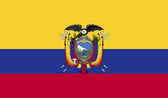
Ecuador
Please note that if the Foreign, Commonwealth and Development Office have advised against all (or all but essential travel) to your destination, we cannot provide cover.
Click here to visit the FCDO's Foreign Travel Advice webpage.
- Intro
- Geography
- Travel
- Embassies & Visas
- Currency
- Health
Quick Facts
Official name: Republic of Ecuador
Capital city: Quito
Official language: Spanish, Quechua, Shuar
Population: Around 18 million
Currency: US dollar (USD)
Time zone: GMT-5
Driving side: Right
Climate: Varied climate depending on region – tropical on the coast and in the Amazon, temperate in the highlands, and cooler in Quito. Wet season generally runs from December to May.
Ecuador may be one of South America’s smaller countries, but it packs in an impressive amount of natural and cultural diversity. From the Andean peaks to the Amazon rainforest, and from colonial cities to the world-famous Galápagos Islands, the country offers adventure and beauty in equal measure. Its mix of Spanish colonial heritage and rich indigenous traditions makes it a fascinating destination for history, culture and wildlife enthusiasts alike.
Straddling the equator, Ecuador is bordered by Colombia, Peru and the Pacific Ocean. Its geography divides into four main regions: the coastal lowlands, the Andes mountains, the Amazon basin, and the Galápagos Islands. Cotopaxi and Chimborazo are among the most famous volcanic peaks. The country is prone to earthquakes, volcanic eruptions and occasional flooding, especially during El Niño years.
Quito and Guayaquil are the main international gateways, with domestic flights linking major cities and the Galápagos Islands. Long-distance buses are the most common way to travel within the country, though road conditions can vary. Quito and Cuenca are both UNESCO World Heritage Sites, while the Galápagos Islands are world-renowned for unique wildlife and strict conservation measures. Popular activities include trekking in the Andes, exploring cloud forests, and cruising the Galápagos.
British nationals and many other visitors can enter Ecuador without a visa for up to 90 days in a 12-month period. A passport valid for at least six months beyond entry is required. Longer stays or different purposes of visit require a visa obtained in advance. The British Embassy is located in Quito, with a consulate in Guayaquil.
Ecuador adopted the US dollar in 2000, and it remains the official currency. US coins and Ecuadorian centavo coins are used interchangeably. ATMs are widely available in towns and cities, and credit cards are accepted at most mid-range and high-end hotels, restaurants and shops. Smaller businesses and rural areas often prefer cash.
Healthcare standards are generally good in Quito, Guayaquil and Cuenca, where private hospitals and clinics offer reliable treatment, but facilities in rural areas are limited. The Amazon region presents risks of mosquito-borne diseases such as malaria and dengue. Altitude sickness can affect visitors in highland areas such as Quito. Tap water is not safe to drink - bottled or boiled water should be used. Comprehensive travel insurance is strongly recommended, especially if planning remote travel or visits to the Galápagos.