Need help?
UK Customer Services0330 880 3600*
Open Monday to Friday 9:00am to 5pm, Saturday 8:30am to 4pm and closed Sundays.
*Calls are recorded for training and quality purposes.
Go back to:
All Country Guides
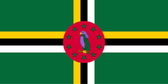
Dominica
Please note that if the Foreign, Commonwealth and Development Office have advised against all (or all but essential travel) to your destination, we cannot provide cover.
Click here to visit the FCDO's Foreign Travel Advice webpage.
- Intro
- Geography
- Travel
- Embassies & Visas
- Currency
- Health
Quick Facts
Official name: Commonwealth of Dominica
Capital city: Roseau
Official language: English, Dominican Creole French
Population: Around 73,000
Currency: Eastern Caribbean dollar (XCD)
Time zone: GMT-4
Driving side: Left
Climate: Tropical, hot and humid year-round with a rainy season from June to November; hurricanes are possible during this period
Dominica, known as the “Nature Island of the Caribbean,” is a lush, mountainous island nation renowned for its rainforests, waterfalls, volcanic peaks and hot springs. Unlike many of its neighbours, it has few sandy beaches, instead attracting eco-tourists, hikers, and divers with its dramatic landscapes and rich biodiversity. The island is part of the Lesser Antilles and offers a slower, more authentic Caribbean experience compared to more commercialised destinations.
The island is volcanic in origin, with steep mountains, deep valleys, and dense tropical forests. Morne Diablotins, the highest peak, rises to 1,447m. The island is famous for Boiling Lake, the second-largest hot spring in the world, and Morne Trois Pitons National Park, a UNESCO World Heritage Site. Natural hazards include hurricanes, heavy rains, and occasional volcanic or seismic activity.
Most visitors arrive via Douglas-Charles Airport, though regional flights often connect through nearby islands such as Antigua or Barbados. Ferry services also link Dominica with Guadeloupe, Martinique and Saint Lucia. Road travel can be slow due to winding, mountainous routes. Tourism centres around eco-adventures, including hiking the Waitukubuli National Trail, river tubing, canyoning, and diving in the Champagne Reef. Infrastructure is improving but remains modest, with many family-run guesthouses and small resorts.
Most visitors arrive via Douglas–Charles Airport, though regional flights often connect through nearby islands such as Antigua or Barbados. Ferry services also link Dominica with Guadeloupe, Martinique and Saint Lucia. Road travel can be slow due to winding, mountainous routes. Tourism centres around eco-adventures, including hiking the Waitukubuli National Trail, river tubing, canyoning, and diving in the Champagne Reef. Infrastructure is improving but remains modest, with many family-run guesthouses and small resorts.
The Eastern Caribbean dollar (XCD) is the official currency, though US dollars are widely accepted. Credit cards are taken at larger hotels and restaurants, but cash is essential for small businesses and rural areas. ATMs are available in Roseau and larger towns. The economy relies heavily on agriculture, especially bananas, as well as eco-tourism.
Medical facilities are basic and limited outside Roseau, with serious cases requiring evacuation to neighbouring islands or the US. Risks include mosquito-borne illnesses such as dengue and chikungunya. The tap water is generally safe in urban areas but bottled or boiled water is recommended for rural travel. Comprehensive travel insurance with evacuation cover is strongly advised, particularly for adventure activities.