Need help?
UK Customer Services0330 880 3600*
Open Monday to Friday 9:00am to 5pm, Saturday 8:30am to 4pm and closed Sundays.
*Calls are recorded for training and quality purposes.
Go back to:
All Country Guides
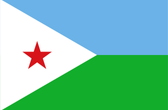
Djibouti
Please note that if the Foreign, Commonwealth and Development Office have advised against all (or all but essential travel) to your destination, we cannot provide cover.
Click here to visit the FCDO's Foreign Travel Advice webpage.
- Intro
- Geography
- Travel
- Embassies & Visas
- Currency
- Health
Quick Facts
Official name: Republic of Djibouti
Capital city: Djibouti City
Official language: French, Arabic, Somali, Afar
Population: Around 1.2 million
Currency: Djiboutian franc (DJF)
Time zone: GMT+3
Driving side: Right
Climate: Hot and arid, with very high summer temperatures and a milder but still dry winter season
Djibouti, at the Horn of Africa, is a small but strategically important nation bordered by Eritrea, Ethiopia and Somalia, with coastlines along the Red Sea and Gulf of Aden. Known for its deserts, volcanic landscapes, and salt lakes, it is also home to marine-rich waters that attract divers and snorkellers. The capital, Djibouti City, is a busy port and a hub for international military bases. Tourism is still developing, but travellers are drawn by unique natural features such as Lake Assal and Lake Abbe, as well as whale shark spotting in the Gulf of Tadjoura.
Djibouti’s geography is defined by volcanic mountains, desert plateaus, and salt lakes. Lake Assal, one of the saltiest bodies of water in the world, lies below sea level, while Lake Abbe is famous for its otherworldly limestone chimneys. The coastline is dotted with coral reefs and beaches, while the interior is arid and sparsely populated. Earthquakes and volcanic activity are occasional natural hazards, and droughts are common.
Most international visitors arrive via Djibouti–Ambouli International Airport. Travel around the country is mainly by road, with taxis and shared minibuses common in the capital. Infrastructure is limited outside major routes. Djibouti is popular with divers and eco-tourists, though facilities remain basic compared with other destinations. Whale shark season runs from November to February. Travellers should exercise caution due to extreme heat and limited medical facilities.
A visa is required for entry and can be obtained in advance or online via Djibouti’s eVisa system. A passport valid for at least six months beyond the date of entry is required. The British Embassy in Djibouti City provides consular support, and most foreign embassies are located in the capital.
The Djiboutian franc (DJF) is the local currency, though US dollars are widely accepted in hotels and for larger payments. Cash is the primary method of transaction, as card facilities are limited outside the capital. ATMs are available in Djibouti City but less reliable elsewhere. Prices can be high due to heavy reliance on imports.
Medical facilities are very limited and not up to European standards. Serious medical issues usually require evacuation to Nairobi or further abroad. Risks include malaria (though less common in Djibouti City), dengue fever, and other mosquito-borne illnesses. Extreme heat and dehydration are significant concerns for visitors. A yellow fever vaccination certificate is required if travelling from a risk country. Comprehensive travel insurance with medical evacuation cover is strongly recommended.