Need help?
UK Customer Services0330 880 3600*
Open Monday to Friday 9:00am to 5pm, Saturday 8:30am to 4pm and closed Sundays.
*Calls are recorded for training and quality purposes.
Go back to:
All Country Guides
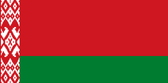
Belarus
Please note that if the Foreign, Commonwealth and Development Office have advised against all (or all but essential) travel to your destination, we cannot provide cover.
Click here to visit the FCDO's Foreign Travel Advice webpage.
- Intro
- Geography
- Travel
- Embassies & Visas
- Currency
- Health
Quick Facts
Official name: Republic of Belarus
Capital city: Minsk
Official language: Belarusian, Russian
Population: Around 9.2 million
Currency: Belarusian rouble (BYN)
Time zone: GMT+3
Driving side: Right
Climate: Temperate continental, with cold winters and mild to warm summers
Belarus is a landlocked country in Eastern Europe bordered by Russia, Ukraine, Poland, Lithuania, and Latvia. Known for Soviet-era architecture, forests, and traditional villages, it has been slower than many neighbours to develop mass tourism. Minsk offers wide boulevards, theatres and museums, while the countryside is dotted with castles, lakes, and natural reserves. Political tensions and restrictions shape the travel environment.
Belarus is mostly flat, covered with forests, rivers, lakes, and wetlands. The country’s highest point is Dzyarzhynskaya Hara (346 m). Winters are long, snowy, and cold; summers are mild to warm with rainfall at times. Its fertile plains support agriculture, but the low-lying landscape is also prone to marshes and bogs.
Minsk has a metro system, and the national road and rail networks are extensive. Driving is on the right. Public transport is cheap, though often crowded. Belarus is considered relatively safe, but petty theft can occur in busy areas. Demonstrations and political gatherings should be avoided due to the risk of police intervention.
Most visitors, including UK, EU and US nationals, require a visa to enter Belarus. Applications are usually made in advance and require proof of accommodation and medical insurance. Limited visa-free entry is possible when arriving at Minsk National Airport under specific conditions. Always check the latest requirements with the Belarusian embassy before travel.
The official currency is the Belarusian rouble (BYN). Cash is still dominant, though cards are accepted in larger hotels, shops and restaurants in Minsk and other cities. ATMs are available in urban areas but limited elsewhere. Currency should only be exchanged at banks or official bureaux de change, and receipts should be kept.
Healthcare is basic compared with Western Europe, with frequent shortages of medicines and equipment. Facilities outside Minsk are limited. Travellers should bring essential medicines and ensure they have comprehensive medical insurance including evacuation cover. Tap water is not always reliable; bottled or boiled water is safer. Vaccinations for hepatitis A, hepatitis B, typhoid and rabies may be recommended, and tick-borne diseases are a risk in rural areas.