
Need help?
UK Customer Services0330 880 3600*
Open Monday to Friday 9:00am to 5pm, Saturday 8:30am to 4pm and closed Sundays.
*Calls are recorded for training and quality purposes.
Go back to:
All Country Guides
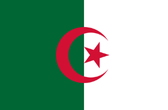
Algeria
Please note that if the Foreign, Commonwealth and Development Office have advised against all (or all but essential travel) to your destination, we cannot provide cover.
Click here to visit the FCDO's Foreign Travel Advice webpage.
- Intro
- Geography
- Travel
- Embassies & Visas
- Currency
- Health
Quick Facts
Official name: People’s Democratic Republic of Algeria
Capital city: Algiers
Official language: Arabic, Berber
Population: Around 44 million
Currency: Algerian dinar (DZD)
Time zone: GMT+1
Driving side: Right
Climate: Warm Mediterranean summers in the north, scorching dry desert heat in the south
Algeria is Africa’s largest country, stretching from the blue waters of the Mediterranean to the endless sands of the Sahara. The country blends Arab, Berber, and French colonial heritage, reflected in its food, language, and architecture. Algiers, the bustling capital, is known for its whitewashed Casbah, lively boulevards, and vibrant markets.
While northern cities are increasingly open to tourism, parts of Algeria still face security risks. Terrorism and unrest are possible in remote regions, particularly near borders, so travellers should always check FCDO advice and stick to approved routes.
Algeria shares borders with Tunisia, Libya, Morocco, Western Sahara, Mauritania, Mali, and Niger, with a long Mediterranean coastline. The fertile Tell Atlas region hugs the coast, giving way to high plateaus and finally the vast Sahara Desert, which covers more than 80% of the country. Northern Algeria enjoys a mild Mediterranean climate, while the desert south sees extreme heat and sudden drops in temperature at night.
Highlights include UNESCO World Heritage sites such as the Roman ruins of Timgad and Djemila, the Casbah of Algiers, and the striking desert landscapes of Tassili n’Ajjer. Road conditions in cities are good, but travel in rural or desert areas is more difficult and often requires permits or guides. While the north is generally safer for visitors, independent travel in remote areas is strongly discouraged due to the risk of terrorism and crime.
British nationals need a visa for entry, which must be arranged in advance via the Algerian Consulate. Passports should be valid for at least six months beyond entry. Travellers may also need to provide a detailed itinerary, particularly if planning travel outside Algiers or coastal areas.
The Algerian dinar (DZD) is the official currency. Cash is the main form of payment, with credit card use limited outside high-end hotels. ATMs are available in larger cities but can be unreliable. Travellers are advised to carry smaller notes and exchange money at official outlets.
Healthcare is reasonable in Algiers and other large cities but very limited in rural areas. No compulsory vaccinations are required, but hepatitis A, hepatitis B, typhoid, and rabies are sometimes recommended depending on planned activities. Bottled water is advised, and food hygiene precautions are sensible. Comprehensive travel insurance, including medical evacuation cover, is essential for trips here.


