Need help?
UK Customer Services0330 880 3600*
Open Monday to Friday 9:00am to 5pm, Saturday 8:30am to 4pm and closed Sundays.
*Calls are recorded for training and quality purposes.
Go back to:
All Country Guides
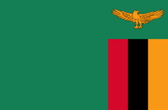
Zambia
Please note that if the Foreign, Commonwealth and Development Office have advised against all (or all but essential travel) to your destination, we cannot provide cover.
Click here to visit the FCDO's Foreign Travel Advice webpage.
- Intro
- Geography
- Travel
- Embassies & Visas
- Currency
- Health
Quick Facts
Official name: Republic of Zambia
Capital city: Lusaka
Languages spoken: English, plus over 70 local languages
Population: Around 20 million
Currency: Zambian kwacha (ZMW)
Time zone: GMT+2
Driving side: Left
Climate: Warm and sunny most of the year, with a rainy season from November to April and cooler, drier months from May to August
Zambia is a landlocked country in southern Africa, best known for its incredible wildlife and natural wonders. It’s home to Victoria Falls, one of the Seven Natural Wonders of the World, and offers some of Africa’s best safari experiences. Friendly locals and a relatively safe environment make it a rewarding destination for travellers seeking both adventure and relaxation.
Zambia shares borders with eight countries, including Zimbabwe, Tanzania, and Angola. The mighty Zambezi River flows along the southern boundary, forming Victoria Falls on the border with Zimbabwe. The country’s landscape is mostly high plateau with rolling hills, woodlands, and river valleys. National parks such as South Luangwa, Lower Zambezi, and Kafue protect vast areas of wilderness.
Most visitors arrive via Kenneth Kaunda International Airport (LUN) in Lusaka or Harry Mwanga Nkumbula International Airport (LVI) near Livingstone. Safaris are the main draw, with walking safaris in South Luangwa considered some of the best in Africa. Beyond Victoria Falls, highlights include canoe trips on the Zambezi, game drives in Kafue, and exploring remote wilderness areas by light aircraft. Public transport is limited, so many travellers rely on organised tours or private transfers.
UK nationals need a visa to enter Zambia. Single-entry visas can be obtained online in advance or on arrival. A KAZA UniVisa, which also covers Zimbabwe, is available at certain border points. The British High Commission is located in Lusaka.
The Zambian kwacha (ZMW) is the official currency. ATMs are widely available in cities, and US dollars are accepted in some hotels and for high-value tourism services. Credit cards are accepted in larger establishments but less so in rural areas, where cash is essential.
Healthcare is limited outside Lusaka and Livingstone. Travellers should have comprehensive insurance that includes medical evacuation. Malaria is present across the country, so prophylaxis and insect repellent are recommended. Yellow fever vaccination may be required if arriving from a country where it is present. Tap water is not considered safe - bottled or boiled water should be used.