Need help?
UK Customer Services0330 880 3600*
Open Monday to Friday 9:00am to 5pm, Saturday 8:30am to 4pm and closed Sundays.
*Calls are recorded for training and quality purposes.
Go back to:
All Country Guides
Other Guides
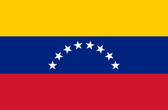
Venezuela
Please note that if the Foreign, Commonwealth and Development Office have advised against all (or all but essential travel) to your destination, we cannot provide cover.
Click here to visit the FCDO's Foreign Travel Advice webpage.
- Intro
- Geography
- Travel
- Embassies & Visas
- Currency
- Health
Quick Facts
Official name: Bolivarian Republic of Venezuela
Capital city: Caracas
Languages spoken: Spanish, plus indigenous languages
Population: Around 28 million
Currency: Venezuelan bolívar (VES), though US dollars widely used
Time zone: GMT-4
Driving side: Right
Climate: Mostly tropical, hot and humid on the coast, cooler in the highlands
Venezuela is a country of stunning natural beauty - from the Caribbean coastline and the world’s highest waterfall, Angel Falls, to the wildlife-rich plains of Los Llanos. It was once a major tourist draw, but in recent years, political and economic instability have made travel here very challenging.
Travellers should be aware that Venezuela currently faces high crime rates, shortages of basic goods, and ongoing political unrest. Kidnappings, robberies, and violent crime are common, and infrastructure such as healthcare, transport, and electricity is unreliable. Most governments advise against all but essential travel.
Venezuela lies on the northern coast of South America, bordered by Colombia, Brazil, and Guyana. Its geography is diverse: the Andes mountains in the west, the Orinoco River basin, vast savannahs in Los Llanos, and Caribbean islands offshore. The southeast features the Guiana Highlands, where Angel Falls cascades from table-top mountains.
International flights into Caracas are limited, and connections within the country can be unreliable. Travellers used to visit Canaima National Park for Angel Falls, the Caribbean island of Margarita, and the wildlife of Los Llanos. While the natural attractions remain spectacular, travel logistics and safety concerns make independent tourism very difficult at present.
UK nationals require a visa to enter Venezuela, which must be arranged before travel. The British Embassy in Caracas can offer limited support due to the security situation. Entry and exit requirements can change with little notice, so it’s vital to check updates before travelling.
The official currency is the Venezuelan bolívar (VES), but inflation and currency issues mean US dollars are widely used. ATMs are unreliable, and credit card acceptance is limited. Travellers usually rely on bringing cash, preferably US dollars in small denominations.
Healthcare in Venezuela has deteriorated severely. Hospitals often lack supplies, equipment, and reliable electricity. Emergency care is extremely limited, and medical evacuation is likely to be necessary in serious cases. Malaria and other mosquito-borne diseases are present in some regions. Travellers should have robust insurance and avoid high-risk areas wherever possible.