Need help?
UK Customer Services0330 880 3600*
Open Monday to Friday 9:00am to 5pm, Saturday 8:30am to 4pm and closed Sundays.
*Calls are recorded for training and quality purposes.
Go back to:
All Country Guides
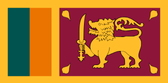
Sri Lanka
Please note that if the Foreign, Commonwealth and Development Office have advised against all (or all but essential travel) to your destination, we cannot provide cover.
Click here to visit the FCDO's Foreign Travel Advice webpage.
- Intro
- Geography
- Travel
- Embassies & Visas
- Currency
- Health
Quick Facts
Official name: Democratic Socialist Republic of Sri Lanka
Capital city: Sri Jayawardenepura Kotte (legislative), Colombo (commercial)
Languages spoken: Sinhala, Tamil, English
Population: Around 22 million
Currency: Sri Lankan rupee (LKR)
Time zone: GMT+5:30
Driving side: Left
Climate: Tropical, with two monsoon seasons affecting different coasts at different times of year
Sri Lanka, the "Pearl of the Indian Ocean," is a country of golden beaches, ancient temples, lush tea plantations, and wildlife-filled national parks. Visitors come for cultural landmarks like Sigiriya Rock Fortress, the sacred city of Kandy, and colonial Galle, as well as safari experiences with elephants and leopards in Yala and Udawalawe National Parks. It’s also an increasingly popular surf and yoga destination.
Travellers should be aware that political protests and demonstrations sometimes take place, particularly in Colombo. These can disrupt transport and services, and occasionally turn violent. It’s best to avoid large gatherings and keep up to date with local news. Conservative attitudes remain in some parts of the country, and LGBTQIA+ relationships are criminalised, which may affect some visitors.
Sri Lanka is an island nation located just southeast of India, separated by the Palk Strait. Its terrain is diverse, with coastal plains, central highlands, and rainforests. The highest point is Pidurutalagala at 2,524 metres. The island’s position in the Indian Ocean has historically made it a key trading hub for spices, tea, and gemstones.
Bandaranaike International Airport (CMB) near Colombo is the main entry point, with regional airports in Mattala and Jaffna. Rail travel is slow but scenic, particularly routes through tea country between Kandy and Ella. Tuk-tuks and buses are widely used for local journeys. Attractions include the ancient cities of Anuradhapura and Polonnaruwa, tea plantations in Nuwara Eliya, whale watching in Mirissa, and palm-lined beaches in Unawatuna and Trincomalee. The best time to visit depends on region: the west and south coasts are driest from December to March, while the east coast is driest from May to September.
UK nationals need an Electronic Travel Authorisation (ETA) before arrival in Sri Lanka. These can be applied for online and are usually valid for up to 30 days, extendable once in-country. Passports must be valid for at least six months. The British High Commission in Colombo offers consular assistance.
The local currency is the Sri Lankan rupee (LKR). ATMs are widely available in cities, though not always reliable in rural areas. Credit and debit cards are accepted in hotels and larger businesses, but cash is preferred in markets and small shops. Bargaining is common at local markets.
Healthcare in Colombo and other major cities is adequate, with private hospitals offering better facilities than public ones. Standards fall significantly in rural areas. Comprehensive travel insurance is strongly recommended, covering medical evacuation. Dengue fever and other mosquito-borne illnesses are present year-round, so repellents and protective clothing are essential. Tap water is not safe to drink — bottled or boiled water should be used. Heat and humidity can also be intense, so travellers should stay well-hydrated and protect against sun exposure.