Need help?
UK Customer Services0330 880 3600*
Open Monday to Friday 9:00am to 5pm, Saturday 8:30am to 4pm and closed Sundays.
*Calls are recorded for training and quality purposes.
Go back to:
All Country Guides
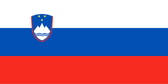
Slovenia
Please note that if the Foreign, Commonwealth and Development Office have advised against all (or all but essential travel) to your destination, we cannot provide cover.
Click here to visit the FCDO's Foreign Travel Advice webpage.
- Intro
- Geography
- Travel
- Embassies & Visas
- Currency
- Health
Quick Facts
Official name: Republic of Slovenia
Capital city: Ljubljana
Languages spoken: Slovene, Hungarian, Italian
Population: Around 2.1 million
Currency: Euro (EUR)
Time zone: GMT+1
Driving side: Right
Climate: Mediterranean on the coast, continental inland, alpine in the north
Slovenia, a small but stunning Central European country, is celebrated for its green landscapes, medieval towns, and outdoor activities. Visitors flock to Lake Bled, Triglav National Park, and the charming streets of Ljubljana, while wine regions and Adriatic coastlines add to its appeal.
Politically, Slovenia is a parliamentary democracy and an EU member state. Laws follow EU standards, and the country is generally open and progressive. Homosexuality is legal, and same-sex partnerships have legal recognition, though attitudes may be more conservative in rural areas. Respect for Catholic traditions is important, particularly when visiting religious sites.
Slovenia is bordered by Italy, Austria, Hungary, and Croatia, with a small coastline along the Adriatic Sea. Its landscape includes the Julian Alps, dense forests, karst plateaus, and fertile plains. Mount Triglav, at 2,864 metres, is the country’s highest peak.
Ljubljana Jože Pucnik Airport (LJU) is the main international gateway. The country has good road and rail links to its neighbours. Top attractions include Lake Bled, Postojna Cave, the Soca Valley, and the coastal town of Piran. Ski resorts like Kranjska Gora attract winter visitors.
As a Schengen Area country, Slovenia allows UK nationals visa-free entry for up to 90 days in any 180-day period. Passports should be valid for at least three months beyond your stay. The British Embassy in Ljubljana provides assistance to UK travellers.
The euro (EUR) is the official currency. Credit cards are widely accepted, and ATMs are common. Tipping around 10% is appreciated in restaurants and cafés.
Healthcare in Slovenia is of a high standard. EU and UK travellers can use reciprocal healthcare agreements, but comprehensive travel insurance is still recommended. Tap water is safe to drink throughout the country.