Need help?
UK Customer Services0330 880 3600*
Open Monday to Friday 9:00am to 5pm, Saturday 8:30am to 4pm and closed Sundays.
*Calls are recorded for training and quality purposes.
Go back to:
All Country Guides
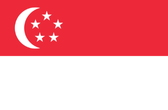
Singapore
Please note that if the Foreign, Commonwealth and Development Office have advised against all (or all but essential travel) to your destination, we cannot provide cover.
Click here to visit the FCDO's Foreign Travel Advice webpage.
- Intro
- Geography
- Travel
- Embassies & Visas
- Currency
- Health
Quick Facts
Official name: Republic of Singapore
Capital city: Singapore
Languages spoken: English, Mandarin Chinese, Malay, Tamil
Population: Around 5.9 million
Currency: Singapore dollar (SGD)
Time zone: GMT+8
Driving side: Left
Climate: Equatorial, hot and humid year-round with frequent rainfall
Singapore is a dynamic city-state at the crossroads of Asia, known for its gleaming skyline, multicultural heritage, and world-class transport system. From hawker centres and night markets to futuristic architecture and lush green spaces, the city blends tradition and innovation seamlessly.
Politically, Singapore is a parliamentary republic with strict laws and a reputation for order and cleanliness. Visitors should be aware that chewing gum imports, littering, jaywalking, and drug offences carry heavy penalties. Homosexuality was decriminalised in 2022, though public displays of affection are uncommon. Freedom of speech and assembly are tightly regulated, so tourists should avoid political activity or demonstrations.
Singapore is located at the southern tip of the Malay Peninsula, consisting of one main island and over 60 smaller islets. It has a highly urbanised landscape interspersed with parks, gardens, and coastal areas.
Changi Airport (SIN) is one of the world’s busiest and most awarded airports, offering direct connections across the globe. Public transport is efficient, with MRT trains, buses, and taxis covering the entire city. Key attractions include Marina Bay Sands, Gardens by the Bay, Sentosa Island, Chinatown, and Little India.
UK nationals do not require a visa for visits of up to 90 days. Passports must be valid for at least six months from the date of entry. The British High Commission in Singapore provides assistance to UK travellers.
The currency is the Singapore dollar (SGD). Credit and debit cards are widely accepted, and ATMs are plentiful. Tipping is not common as a 10% service charge is usually added to bills.
Singapore has excellent healthcare facilities. Comprehensive travel insurance is advised, particularly to cover medical costs in private hospitals. No compulsory vaccinations are required, but mosquito-borne illnesses such as dengue fever occur, so precautions are sensible. Tap water is safe to drink.