Need help?
UK Customer Services0330 880 3600*
Open Monday to Friday 9:00am to 5pm, Saturday 8:30am to 4pm and closed Sundays.
*Calls are recorded for training and quality purposes.
Go back to:
All Country Guides
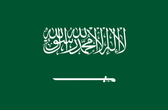
Saudi Arabia
Please note that if the Foreign, Commonwealth and Development Office have advised against all (or all but essential travel) to your destination, we cannot provide cover.
Click here to visit the FCDO's Foreign Travel Advice webpage.
- Intro
- Geography
- Travel
- Embassies & Visas
- Currency
- Health
Quick Facts
Official name: Kingdom of Saudi Arabia
Capital city: Riyadh
Languages spoken: Arabic, English
Population: Around 36 million
Currency: Saudi riyal (SAR)
Time zone: GMT+3
Driving side: Right
Climate: Desert climate with extremely hot summers and mild winters
Saudi Arabia, the birthplace of Islam, is a vast desert kingdom with both ancient traditions and modern ambition. Known for the holy cities of Mecca and Medina, as well as futuristic projects like NEOM, it is increasingly opening up to international tourism. From Red Sea beaches to sweeping sand dunes and heritage sites like AlUla, Saudi Arabia offers a diverse and rapidly evolving travel experience.
Politically, Saudi Arabia is an absolute monarchy with strict social and religious laws. Visitors should be aware of local customs and expectations: women are no longer legally required to wear the abaya, but modest dress is expected, particularly in rural or religious areas. Homosexuality and LGBTQIA+ expression are illegal, and travellers should exercise discretion. Public behaviour is closely regulated, and criticism of the monarchy or religion is not tolerated.
Saudi Arabia dominates the Arabian Peninsula, bordered by Jordan, Iraq, Kuwait, Qatar, the UAE, Oman, and Yemen. Its landscape is largely desert, including the Rub’ al Khali (Empty Quarter), the world’s largest sand desert. The western Hejaz region features mountains and the holy cities, while the Red Sea and Arabian Gulf coastlines offer long stretches of beaches.
Main entry points are King Khalid International Airport (Riyadh), King Abdulaziz International Airport (Jeddah), and King Fahd International Airport (Dammam). Domestic air travel is common due to the country’s size. Key attractions include the UNESCO-listed rock tombs of AlUla, Jeddah’s historic Al-Balad district, the futuristic Riyadh skyline, and Red Sea diving. Women can now travel more freely than in the past, but local laws and cultural norms must be respected.
UK nationals require a visa to enter Saudi Arabia. Tourist e-visas are available online for eligible nationalities, including the UK. Passports must be valid for at least six months from the date of entry. The British Embassy is located in Riyadh, with consulates in Jeddah and Al Khobar.
The official currency is the Saudi riyal (SAR). Credit cards are widely accepted, especially in urban areas, and ATMs are plentiful. Tipping is customary in restaurants and for services.
Medical facilities in major cities are of high quality, but standards may vary elsewhere. Comprehensive travel insurance is essential, including cover for medical evacuation. Summer heat can be extreme, so hydration and sun protection are vital. Vaccinations for hepatitis A, hepatitis B, and meningitis may be recommended, particularly for Hajj or Umrah pilgrims. Bottled water is the safest option for visitors.