Need help?
UK Customer Services0330 880 3600*
Open Monday to Friday 9:00am to 5pm, Saturday 8:30am to 4pm and closed Sundays.
*Calls are recorded for training and quality purposes.
Go back to:
All Country Guides
Other Guides
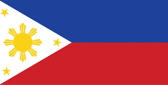
Philippines
Please note that if the Foreign, Commonwealth and Development Office have advised against all (or all but essential travel) to your destination, we cannot provide cover.
Click here to visit the FCDO's Foreign Travel Advice webpage.
- Intro
- Geography
- Travel
- Embassies & Visas
- Currency
- Health
Quick Facts
Official name: Republic of the Philippines
Capital city: Manila
Languages spoken: Filipino, English, plus over 170 regional languages and dialects
Population: Around 115 million
Currency: Philippine peso (PHP)
Time zone: GMT+8
Driving side: Right
Climate: Tropical and humid, with a dry season from December to May and a wet, typhoon-prone season from June to November
The Philippines is a sprawling archipelago of more than 7,000 islands, known for its pristine beaches, lush rice terraces, vibrant cities, and rich cultural heritage. Spanish, American, and Asian influences blend across its traditions, cuisine, and architecture. While tourism thrives in hotspots like Boracay, Palawan, and Cebu, political tensions and natural disasters such as typhoons and volcanic eruptions can sometimes disrupt travel.
The Philippines lies in Southeast Asia, between the South China Sea and the Philippine Sea. It is divided into three main island groups: Luzon in the north, the Visayas in the centre, and Mindanao in the south. Its geography is defined by mountain ranges, active volcanoes, tropical forests, and extensive coastlines. The country sits on the Pacific Ring of Fire, making earthquakes and volcanic activity relatively common.
Ninoy Aquino International Airport in Manila and Mactan-Cebu International Airport are the busiest international gateways. Domestic travel is widespread, with budget airlines and ferries linking the islands. Jeepneys, tricycles, and buses are common for short-distance travel, though traffic congestion in cities like Manila can be severe.
UK citizens can enter the Philippines without a visa for stays of up to 30 days, provided they hold an onward or return ticket. For longer stays, visas are required and must be arranged in advance. The British Embassy is located in Manila.
The Philippine peso (PHP) is the local currency. ATMs are widely available in cities, and major credit cards are accepted in larger hotels, restaurants, and shops. Cash remains essential in rural areas and on smaller islands. Currency exchange is straightforward in banks, shopping malls, and official money changers.
Medical facilities in Manila and larger cities are of reasonable standard, but outside urban areas, healthcare can be limited. Travellers should ensure they have comprehensive medical insurance. Dengue fever and other mosquito-borne illnesses are common, especially during the rainy season. Tap water is not safe to drink – bottled or filtered water is recommended. Vaccinations for hepatitis A, typhoid, and tetanus are advisable.