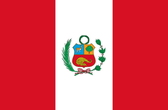
Peru flag Peru
Facing the Pacific, Peru is an important link between south-east Asia and Brazil. It is a potentially wealthy country, rich in metals and tourist-drawing scenery. Its development, however, has been hampered by endemic corruption and the failure of successive governments to address social and economic inequality. A small elite of Spanish descent controls most of Peru's wealth and political power, while the indigenous peoples are largely excluded from both and make up many of the millions of Peruvians who live below the poverty line. Hence the country is deeply divided politically and economically. Its recent history has seen it alternate between democracy and military dictatorship. In addition, the preoccupation of successive governments with domestic power struggles has meant that the economy and infrastructure have been neglected, a fact which for years fuelled Peru's guerrilla insurgencies. Peru witnessed a brutal war against Maoist rebels, which claimed as many as 69,000 lives in the 1980s and 1990s. Despite the virtual destruction of guerrilla groups, violence -- in the form of murders, armed robberies and gang warfare -- is still a problem, and Peru has yet to succeed in eliminating coca production. Because of these problems, foreign investors have generally given Peru a wide berth. In recent years, however, bold reform programs and significant progress in curtailing guerrilla activity and drug trafficking have resulted in solid economic growth. Former President Alan Garcia celebrated a dramatic political comeback in June 2006, 16 years after he left office with rock-bottom approval ratings. Hyperinflation, food shortages and a Maoist guerrilla insurgency plagued his 1985-1990 term. He won a run-off vote in presidential elections having campaigned on promises to tackle poverty and boost economic growth. His rival, the political newcomer and former military man Ollanta Humala, was backed by Venezuela's populist leftist leader Hugo Chavez. Garcia represents Peru's oldest political party, Apra (Alianza Revolucionaria Americana). He narrowly lost the 2001 presidential poll to his predecessor, Alejandro Toledo, who took office promising to wage "a head-on war on poverty" but struggled to improve the lot of the poor and to deliver on a pledge to create one million jobs over five years. The Toledo presidency was beset by scandal and crises. Toledo oversaw economic growth but had to balance the need for economic prudence with calls for more spending on social programmes and public-sector wage increases. He was beset by street protests and a string of scandals involving ministers, aides and family members. Peru is a member of the Andean Community, set up in March 1996 by leaders of Bolivia, Colombia, Ecuador, Peru, and Venezuela. At that time, the five national leaders expressed their intent to move towards a single market along the lines of the European Union, although significant policy differences need to be worked out. Furthermore, the Community is working towards integrating energy sectors, particularly electricity and natural gas markets, through physical networks and harmonized regulatory frameworks. In November 1997, Peru joined the Asia Pacific Economic Cooperation (APEC) forum. Peru has also been participating in the Free Trade Area of the Americas negotiations - an issue that has sparked protests.
The Shining Path (Sendero Luminoso) rebel group, which had been dormant for over a decade, claimed responsibility for a powerful car-bombing in March 2002, in a shopping arcade directly across from the U.S. Embassy in Lima. In 2003, the U.S. Secretary of State re-designated the group as a "Foreign Terrorist Organization" under 1996 anti-terrorism legislation. The Shining Path has also targeted U.S. interests in the past. Its activites, however, have been generally restricted to certain parts of the interior of Peru, and its capabilities have been greatly diminished due to the many arrests of senior leaders. Sporadic, isolated incidents of Shining Path violence have occurred from 2000 to the present in rural provinces of Ayacucho, Huancavelica, Huanuco, Junin, and San Martin. These have included kidnappings and attacks by large, heavily-armed groups on Peruvian and foreign pipeline workers in a remote area of the Department of Ayacucho, as well as acts of urban terrorism that have caused fatalities. However, the most common incidents were roadblocks and armed confrontations between Shining Path columns and Peruvian army or police patrols in remote areas. None of these incidents occurred in areas normally visited by tourists. Mining prospectors, adventure travelers and others considering travel to remote areas of Peru, however, could be affected by Shining Path activities, and should consult with local authorities and use extreme caution. Peru and neighboring Ecuador have fought over a disputed 50-mile stretch of highland jungle in the Cordillera del Condor region along Peru's northeastern border 3 times in the last 47 years, most recently in 1995, when 19 days of fighting left hundreds of casualties. The two nations almost went to war a fourth time in August of 1998, but pulled back and negotiated a border settlement and peace treaty -- brokered by the United States, Brazil, Argentina and Chile -- in October 1998. In August 1999, the countries signed bilateral agreements to build bridges and roads between the neighbors. The Peruvian government is working to remove mines and unexploded ordnance left over from the conflict, but crossing or approaching the Peru-Ecuador border anywhere except at official checkpoints can still be dangerous. The entire Peru/Colombia border area is very dangerous due to drug trafficking and the occasional incursions of armed guerrilla forces from Colombia into Peru’s remote areas; there have been instances of kidnapping with hostages held for ransom. Like neighboring Bolivia, Peru faces growing peasant unrest. Farmers in southern and central Peru have openly rebelled over government efforts to stem coca production. Hundreds of angry coca growers in the central jungle region blocked roads, burned cars and stoned shops in May 2004 to call for an end to the U.S.-backed eradication of their crop, the raw material for cocaine. In April 2004, rioting highland Indians demanding the resignation of their mayor broke into his house, dragged him into the street and beat him to death. These incidents are likely to continue, but generally do not affect areas where foreign travelers normally venture. Travelers should avoid travel to Ilave and surrounding towns in the Puno district, due to recent violence, unrest and kidnappings. Political demonstrations and labor-related strikes and marches regularly occur in urban and some rural areas. These affect major highways, and can cause serious disruptions to road, air and rail transportation. Demonstrations are usually announced in advance. While these activities are usually peaceful, they can escalate into violent confrontations. Avoid large crowds and demonstrations.