Need help?
UK Customer Services0330 880 3600*
Open Monday to Friday 9:00am to 5pm, Saturday 8:30am to 4pm and closed Sundays.
*Calls are recorded for training and quality purposes.
Go back to:
All Country Guides
Other Guides
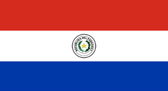
Paraguay
Please note that if the Foreign, Commonwealth and Development Office have advised against all (or all but essential travel) to your destination, we cannot provide cover.
Click here to visit the FCDO's Foreign Travel Advice webpage.
- Intro
- Geography
- Travel
- Embassies & Visas
- Currency
- Health
Quick Facts
Official name: Republic of Paraguay
Capital city: Asunción
Languages spoken: Spanish, Guaraní
Population: Around 7.6 million
Currency: Paraguayan guaraní (PYG)
Time zone: GMT-4
Driving side: Right
Climate: Subtropical in the east and semi-arid in the west; hot summers with heavy rains, mild winters
Paraguay is a landlocked country in the heart of South America, known for its rivers, savannahs, and mix of Spanish and Guaraní heritage. Often overlooked by travellers, it offers a slower pace of life, colonial towns, and natural reserves. Tourism remains limited compared to neighbours Brazil and Argentina, which gives Paraguay a more off-the-beaten-path feel.
The country is divided by the Paraguay River into two regions: the fertile, green eastern region and the dry, sparsely populated Gran Chaco to the west. Major rivers such as the Paraná and Pilcomayo form natural boundaries with neighbouring countries. The terrain is generally flat, with rolling hills and wetlands in the east and scrubland in the west.
Asunción’s Silvio Pettirossi International Airport is the main international hub, with limited long-haul connections. Domestic flights are rare, and most travel is by long-distance buses, which connect cities and towns reliably. Roads in rural areas may be in poor condition, especially during the rainy season. Taxis and rideshares are common in Asunción, but walking after dark is discouraged.
British nationals can enter Paraguay without a visa for stays of up to 90 days. A valid passport is required, and extensions may be possible through immigration authorities. The British Embassy in Paraguay is represented through the British Embassy in Buenos Aires, Argentina, though there is an honorary consulate in Asunción.
The Paraguayan guaraní (PYG) is the official currency. ATMs are widely available in major cities, but less so in rural areas. Credit cards are accepted in larger hotels, restaurants, and shops, though cash is still essential for everyday transactions. Currency exchange is straightforward in banks and authorised exchange houses.
Healthcare facilities are limited, particularly outside Asunción. Private hospitals offer better standards than public ones, but serious medical cases may require evacuation. Dengue fever, Zika virus, and chikungunya are present, especially during the rainy season. Tap water is not safe to drink, so bottled or boiled water is recommended. Comprehensive travel insurance with medical evacuation cover is strongly advised.