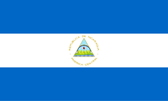
Nicaragua flag Nicaragua
Settled as a colony of Spain in the 1520s, Nicaragua gained its independence in 1821. Nicaragua is working to overcome the after-effects of dictatorship, civil war and natural calamities, which have made it one of the poorest countries in the Western Hemisphere (the second-poorest in the Americas, after Haiti). The Nicaraguan economy has traditionally relied on agricultural exports, but these benefited mainly a few elite families of Spanish descent, primarily the Somoza family, which ruled the country with US backing between 1937 and the Sandinista revolution in 1979. Violent opposition to governmental manipulation and corruption spread to all classes by 1978 and resulted in a short-lived civil war that brought the Marxist Sandinista guerrillas to power in 1979. The Sandinistas began redistributing property and made huge progress in the spheres of health and education. They won a decisive victory in 1984 elections, but their leftist orientation also attracted US hostility and drove them to turn to the USSR and Cuba. Nicaraguan aid to leftist rebels in El Salvador motivated the US to sponsor anti-Sandinista “contra” guerrillas through much of the 1980s. The United States armed and financed thousands of Contras to carry out attacks on Nicaragua from bases in Honduras. The US also imposed trade sanctions and mined Nicaraguan harbours. By 1990, when the Sandinistas were defeated in elections held as part of a peace agreement, Nicaragua's per capita income had plummeted and its infrastructure was in tatters. Peace brought some economic growth, lower inflation and lower unemployment, but in 1998, Hurricane Mitch killed thousands of people, rendered 20% of the population homeless and caused billions of dollars worth of damage. Nicaragua's modest tourist industry - which had all but collapsed by the early 1990s - has enjoyed a revival. The country's attractions include wildlife-rich rainforests, volcanos, beaches and colonial-era architecture. Former President Enrique Bolaños, from the Liberal Constitutionalist Party, came to power in November 2001 and sought to distance himself from the stained reputation of his predecessor and Liberal leader, Arnoldo Aleman. His government brought charges against Aleman, who was convicted of fraud and money-laundering; but with the alienation of Aleman loyalists, Bolaños was politically isolated. Aleman loyalists made an unlikely alliance with the leftist Sandinistas, and came to dominate Congress. Former President and Sandinista guerrilla commander Daniel Ortega won the presidential election in November 2006, with an inauguration in January 2007. Nicaragua has several territorial disputes with its neighbors. There are disputes with Costa Rica over navigational rights on the San Juan River and whether Costa Rican patrol vessels should be permitted to carry arms. The large number of Nicaraguan residents in Costa Rica (many having entered illegally) also adds tension to the relationship. In November 1999, a maritime dispute with Honduras flared up; Honduras had ratified a treaty whereby Colombia's right to the San Andreas and Providencia islands in the Caribbean was recognized. Nicaragua has submitted its case to the International Court at The Hague for resolution of the territorial dispute with Colombia.
Political demonstrations and strikes occur sporadically, are usually limited to urban areas, and occasionally become violent. Access to the airport can be affected. Avoid crowds and blockades during such occurrences. Do not attempt to pass roadblocks. Although hundreds of passengers travel daily on domestic flights within Nicaragua without incident, these flights use small, uncontrolled airstrips outside of Managua, with minimal safety equipment and little boarding security. Significant safety and security improvements have been made at the Bluefields, Puerto Cabezas and Corn Island airports, all of which are located on Nicaragua's Atlantic coast. During the wet season (April to October), if flying to or from the Atlantic coast, use early morning flights, because of the risk of severe storms later in the day. Although extensive demining operations have been conducted to clear rural areas of northern Nicaragua of landmines left from the war, visitors venturing off the main roads in these areas are cautioned that the possibility of encountering landmines still exists. Nicaragua is prone to seismic and volcanic activity, hurricanes, severe storms and flooding. The last serious earthquake in 1972 destroyed the center of Managua. Regular small tremors (most of which go unnoticed) release pressures that could otherwise trigger a larger earthquake. The hurricane season in Nicaragua normally runs from June to November. The wet season from April to October brings heavy rains and severe storms. Flooding is common and widespread. A spine of volcanoes stretches the length of the country, several of which are active, in particular San Cristobal and Cerro Negro. The San Cristobal volcano, 60 miles west of the capital of Managua, has been emitting gas and ash since early 2006. Follow media reports and keep in touch with the local authorities if intending to visit the area. Do not hike without an experienced guide on volcanoes or in remote areas. Three tourists including a British national died when hiking on Ometepe Island’s volcanoes in 2004. Hikers should have appropriate dress, footwear, and sufficient consumables for any trek undertaken. If traveling to remote areas, hire a local guide familiar with the terrain and area. Poor road safety may present the biggest single hazard to travelers in Nicaragua. Road conditions are generally poor, particularly during the wet season when large potholes can appear overnight. There is no street lighting on the main highways between major cities and only minimal street lighting in urban areas. Driving standards and the conditions of vehicles are poor, particularly those of taxis and buses. Many vehicles do not have rear, brake or indicator (blinker) lights. Running red traffic lights is common practice. Drunk driving is a severe problem. The judicial system is subject to corruption and political influence. Nautical travelers should be aware that there are boundary disputes (see “Background”) involving the governments of Nicaragua, Costa Rica and Honduras in the Caribbean coastal waters adjoining these countries, and on the San Juan River. Passengers and crews of foreign fishing boats have been detained and/or fined and vessels impounded. There also is a long-term boundary dispute with Colombia over San Andres Island and surrounding waters. Also be aware that narcotics traffickers often use the Caribbean coastal waters. Strong currents and undertows off sections of Nicaragua's Pacific coast have resulted in a number of drownings. Warning signs are not posted, and lifeguards and rescue equipment are not readily available in Nicaragua.