
Need help?
UK Customer Services0330 880 3600*
Open Monday to Friday 9:00am to 5pm, Saturday 8:30am to 4pm and closed Sundays.
*Calls are recorded for training and quality purposes.
Go back to:
All Country Guides
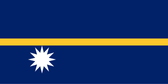
Nauru
Please note that if the Foreign, Commonwealth and Development Office have advised against all (or all but essential travel) to your destination, we cannot provide cover.
Click here to visit the FCDO's Foreign Travel Advice webpage.
- Intro
- Geography
- Travel
- Embassies & Visas
- Currency
- Health
Quick Facts
Official name: Republic of Nauru
Capital city: No official capital, government offices in Yaren District
Languages spoken: Nauruan, English
Population: Around 12,000
Currency: Australian dollar (AUD)
Time zone: GMT+12
Driving side: Left
Climate: Hot and humid year-round, with a wet season from November to February and slightly drier months in between
Nauru is the world’s smallest island nation, located in the Pacific Ocean northeast of Australia. Known for its phosphate mining history, the island has limited tourism infrastructure but offers a unique, off-the-beaten-track experience. The country’s isolation and tiny size give it a distinctive character, though facilities for visitors are basic.
Nauru is a single oval-shaped island covering just 21 square kilometres. It is surrounded by a coral reef and has no natural harbour. The interior plateau, once heavily mined for phosphate, dominates the centre, while the coastal strip is narrow and low-lying.
Access to Nauru is mainly via Nauru International Airport, served by Nauru Airlines with connections to Australia, Fiji, and other Pacific nations. Road travel is simple, with a single 19-kilometre ring road around the island. There is no public transport system, but cars and bicycles can be rented.
Most visitors require a visa to enter Nauru, which must be arranged in advance through Nauruan authorities. The UK has no diplomatic mission in Nauru; consular support is provided by the British High Commission in Suva, Fiji.
The Australian dollar (AUD) is the official currency. Credit card facilities are extremely limited, and visitors should carry sufficient cash for the duration of their stay.
Healthcare in Nauru is very limited, with only basic hospital facilities available. Medical evacuation to Australia or another Pacific nation is often required for serious conditions. Comprehensive travel insurance including medical evacuation cover is essential. Bottled water is recommended, and the hot, humid climate makes hydration important.