Need help?
UK Customer Services0330 880 3600*
Open Monday to Friday 9:00am to 5pm, Saturday 8:30am to 4pm and closed Sundays.
*Calls are recorded for training and quality purposes.
Go back to:
All Country Guides
Namibia
Please note that if the Foreign, Commonwealth and Development Office have advised against all (or all but essential travel) to your destination, we cannot provide cover.
Click here to visit the FCDO's Foreign Travel Advice webpage.
- Intro
- Geography
- Travel
- Embassies & Visas
- Currency
- Health
Quick Facts
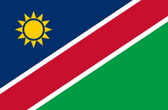
Official name: Republic of Namibia
Capital city: Windhoek
Languages spoken: English, Afrikaans, Oshiwambo, Herero, Nama/Damara
Population: Around 2.6 million
Currency: Namibian dollar (NAD), South African rand (ZAR) also accepted
Time zone: GMT+2
Driving side: Left
Climate: Dry and sunny most of the year, with hot days and cool nights; the coastal areas are moderated by the Atlantic’s Benguela Current
Namibia is known for its striking landscapes, from the towering dunes of Sossusvlei to the wildlife-rich Etosha National Park. Once under German and later South African rule, it has been independent since 1990 and remains one of Africa’s more stable countries. Its blend of arid desert, dramatic coastlines, and abundant wildlife makes it a favourite for adventure and eco-tourism.
The country borders Angola, Zambia, Botswana, and South Africa, with a long Atlantic coastline known as the Skeleton Coast. Much of Namibia is desert or semi-desert, including the Namib and Kalahari. The interior is marked by high plateaus and rugged mountains.
Hosea Kutako International Airport in Windhoek is the main entry point, with flights from Europe and regional hubs like Johannesburg and Cape Town. Road travel is the best way to explore, with well-maintained highways but long distances between destinations. Car hire is popular, especially for self-drive safaris, though a 4x4 is often recommended.
UK citizens do not need a visa for stays of up to 90 days. Passports should be valid for at least six months beyond your date of entry. The British High Commission is located in Windhoek.
The Namibian dollar (NAD) is pegged to the South African rand (ZAR), and both currencies are accepted. Credit cards are widely used in towns, hotels, and lodges, though cash is useful in rural areas. ATMs are widely available in cities.
Healthcare facilities are generally good in Windhoek and other main centres, but limited in rural areas. Comprehensive travel insurance with medical evacuation cover is advised. Malaria is a risk in the north and northeast, particularly during the rainy season (November to April). Tap water is safe in cities but bottled water is recommended when travelling in remote areas.