Need help?
UK Customer Services0330 880 3600*
Open Monday to Friday 9:00am to 5pm, Saturday 8:30am to 4pm and closed Sundays.
*Calls are recorded for training and quality purposes.
Go back to:
All Country Guides
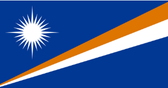
Marshall Islands
Please note that if the Foreign, Commonwealth and Development Office have advised against all (or all but essential travel) to your destination, we cannot provide cover.
Click here to visit the FCDO's Foreign Travel Advice webpage.
- Intro
- Geography
- Travel
- Embassies & Visas
- Currency
- Health
Quick Facts
Official name: Republic of the Marshall Islands
Capital city: Majuro
Languages spoken: Marshallese, English
Population: Around 42,000
Currency: US dollar (USD)
Time zone: GMT+12
Driving side: Right
Climate: Hot and humid year-round, with a wet season from May to November and a drier spell from December to April
The Marshall Islands is a Pacific island nation made up of over a thousand low-lying atolls and islands spread across two chains – the Ratak (Sunrise) and Ralik (Sunset). Known for pristine lagoons, diving spots, and a rich Micronesian culture, the country also faces serious challenges from rising sea levels and the legacy of US nuclear testing in the mid-20th century.
The islands are coral atolls and volcanic islets scattered over a huge expanse of ocean. The terrain is flat, with the highest point barely reaching 10 metres above sea level. Its geography makes it highly vulnerable to climate change and extreme weather events.
International access is via Amata Kabua International Airport in Majuro, with flights mainly from Honolulu, Guam, and other Pacific islands. Domestic transport is limited to boats and small planes, as distances between atolls are vast. Infrastructure is basic, and services outside Majuro and Ebeye can be sparse.
UK citizens and many other nationalities can enter the Marshall Islands visa-free for up to 90 days. Longer stays or work purposes require permits. Diplomatic representation is limited, and the nearest British consular assistance is usually through Fiji.
The US dollar (USD) is the official currency. Credit cards are accepted in some hotels and businesses in Majuro, but cash is essential elsewhere. ATMs are limited and may not always function reliably.
Healthcare facilities are limited, with only basic hospitals in Majuro and Ebeye. More complex treatment generally requires evacuation to Hawaii or Fiji. Medical supplies may be scarce, so travellers should bring any essential medication with them. Travel insurance that includes medical evacuation is strongly recommended.