Need help?
UK Customer Services0330 880 3600*
Open Monday to Friday 9:00am to 5pm, Saturday 8:30am to 4pm and closed Sundays.
*Calls are recorded for training and quality purposes.
Go back to:
All Country Guides
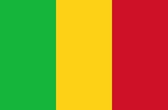
Mali
Please note that if the Foreign, Commonwealth and Development Office have advised against all (or all but essential travel) to your destination, we cannot provide cover.
Click here to visit the FCDO's Foreign Travel Advice webpage.
- Intro
- Geography
- Travel
- Embassies & Visas
- Currency
- Health
Quick Facts
Official name: Republic of Mali
Capital city: Bamako
Languages spoken: French, Bambara
Population: Around 21 million
Currency: West African CFA franc (XOF)
Time zone: GMT+0
Driving side: Right
Climate: Hot and dry across most of the country, with a short rainy season that brings temporary relief to the parched landscape
Mali, a vast landlocked country in West Africa, is known for its rich history, from the ancient city of Timbuktu to the great empires of the Sahel. Today, however, it faces significant challenges including poverty, political instability, and ongoing conflict in the north and central regions. Travellers are strongly advised to check the latest FCDO updates before planning any visit.
The Niger River runs through Mali and provides a vital lifeline for agriculture and communities. The country’s geography shifts from the arid Sahara Desert in the north to semi-arid Sahel savannas in the centre, and more fertile lands in the south. Much of Mali’s cultural heritage is concentrated along the Niger, where ancient trade routes once thrived.
Bamako-Sénou International Airport is the main entry point, with limited international connections. Travel within the country can be difficult due to poor infrastructure and security concerns, especially outside the capital. Domestic flights exist but are infrequent, and road travel carries risks due to banditry and road conditions.
UK citizens need a visa to visit Mali, which must be obtained in advance from the Malian Embassy. Entry requirements often include proof of yellow fever vaccination. The British Embassy in Bamako provides limited consular assistance due to the security environment.
Mali uses the West African CFA franc (XOF), which is shared with several neighbouring countries and tied to the euro. Cash is essential outside major cities, and ATMs can be unreliable. Credit cards are rarely accepted beyond international hotels in Bamako.
Healthcare in Mali is extremely limited, particularly outside the capital. Medical facilities often lack supplies and equipment, making evacuation necessary for serious conditions. Malaria is widespread, and yellow fever vaccination is mandatory for entry. Bottled or treated water should be used for drinking and brushing teeth.