Need help?
UK Customer Services0330 880 3600*
Open Monday to Friday 9:00am to 5pm, Saturday 8:30am to 4pm and closed Sundays.
*Calls are recorded for training and quality purposes.
Go back to:
All Country Guides
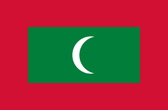
Maldives
Please note that if the Foreign, Commonwealth and Development Office have advised against all (or all but essential travel) to your destination, we cannot provide cover.
Click here to visit the FCDO's Foreign Travel Advice webpage.
- Intro
- Geography
- Travel
- Embassies & Visas
- Currency
- Health
Quick Facts
Official name: Republic of Maldives
Capital city: Malé
Languages spoken: Dhivehi, English
Population: Around 520,000
Currency: Maldivian rufiyaa (MVR)
Time zone: GMT+5
Driving side: Left
Climate: Warm and humid all year, with sunshine tempered by tropical showers and a monsoon season that brings bursts of heavy rain
The Maldives is a chain of nearly 1,200 coral islands scattered across the Indian Ocean, famed for turquoise lagoons, overwater villas, and some of the best diving in the world. Tourism is the backbone of its economy, drawing visitors to luxury resorts, pristine beaches, and vibrant marine life. While Malé is busy and densely populated, most travellers head straight to resort islands or guesthouses on local islands.
The Maldives stretches across 26 atolls, running north to south over 800 kilometres. Its islands are mostly low-lying, with the highest point just a few metres above sea level, making the nation highly vulnerable to rising seas. Coral reefs surround most islands, protecting sandy beaches and providing habitats for a spectacular range of fish and marine creatures.
Velana International Airport near Malé is the main gateway, with many resorts accessible by speedboat or seaplane transfer. Domestic flights connect the further atolls, while ferries provide affordable transport for locals and budget travellers. Once on an island, travel is usually on foot, bicycle, or small motorbikes.
UK and most other nationals receive a free 30-day visa on arrival, provided they have proof of onward travel and accommodation. Passports must be valid for at least six months. Longer stays require an extension from Maldivian immigration. The British High Commission to the Maldives is based in Colombo, Sri Lanka, though consular support is available via the British Embassy in Malé.
The Maldivian rufiyaa (MVR) is the official currency, though US dollars are widely accepted in resorts and tourist areas. Credit cards are the primary method of payment in resorts. On local islands, small shops and cafés may prefer cash. ATMs are available in Malé and larger inhabited islands, but less so in remote areas.
Healthcare facilities in Malé are reasonable, with some private hospitals, but facilities on smaller islands are very limited. Emergency evacuation may be required for serious conditions, so comprehensive insurance is essential. Dengue fever and other mosquito-borne illnesses are present. Tap water is generally not safe to drink; bottled or treated water is recommended.