Need help?
UK Customer Services0330 880 3600*
Open Monday to Friday 9:00am to 5pm, Saturday 8:30am to 4pm and closed Sundays.
*Calls are recorded for training and quality purposes.
Go back to:
All Country Guides
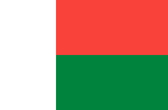
Madagascar
Please note that if the Foreign, Commonwealth and Development Office have advised against all (or all but essential travel) to your destination, we cannot provide cover.
Click here to visit the FCDO's Foreign Travel Advice webpage.
- Intro
- Geography
- Travel
- Embassies & Visas
- Currency
- Health
Quick Facts
Official name: Republic of Madagascar
Capital city: Antananarivo
Languages spoken: Malagasy, French
Population: Around 29 million
Currency: Malagasy ariary (MGA)
Time zone: GMT+3
Driving side: Right
Climate: Tropical along the coast, temperate inland, and arid in the south; expect a hot, rainy season from November to April and a cooler, drier period from May to October
Madagascar, the world’s fourth-largest island, sits off Africa’s southeast coast in the Indian Ocean. Famous for its unique biodiversity, more than 80% of its wildlife exists nowhere else on Earth, from lemurs and chameleons to baobab trees. The country has a mix of African and Asian cultural influences, shaped by centuries of migration and trade. While its natural beauty is unmatched, Madagascar faces challenges including poverty, political instability, and vulnerability to cyclones.
The island is defined by high plateaus in the centre, tropical lowlands along the coasts, and dry desert-like landscapes in the south. The eastern coastline is lush and rain-soaked, while the western side is drier with mangroves and savannahs. Its isolation has fostered extraordinary ecosystems, making it one of the planet’s most important biodiversity hotspots.
Most visitors arrive via Ivato International Airport in Antananarivo. Domestic flights link major towns, though schedules can be irregular. Roads vary widely in quality, with rough conditions outside urban areas. Taxis and bush taxis (taxi-brousse) are common for local transport.
UK citizens need a visa to enter Madagascar, which can be obtained on arrival for short stays or through the Malagasy embassy. Passports should be valid for at least six months. The British Embassy in Madagascar is represented through an office in Antananarivo, offering consular support.
The Malagasy ariary (MGA) is the official currency. ATMs are available in larger towns and cities, though cash is essential in rural areas. Credit cards are accepted at some hotels and restaurants in Antananarivo and tourist centres, but they should not be relied upon.
Healthcare is limited, especially outside the capital. Facilities may not meet international standards, and medical evacuation is often required for serious conditions. Malaria is present across most of the island, and precautions are strongly advised. Tap water is unsafe to drink — bottled or treated water should be used. Travel insurance with medical evacuation cover is highly recommended.