Need help?
UK Customer Services0330 880 3600*
Open Monday to Friday 9:00am to 5pm, Saturday 8:30am to 4pm and closed Sundays.
*Calls are recorded for training and quality purposes.
Go back to:
All Country Guides
Other Guides
Latvia
Please note that if the Foreign, Commonwealth and Development Office have advised against all (or all but essential travel) to your destination, we cannot provide cover.
Click here to visit the FCDO's Foreign Travel Advice webpage.
- Intro
- Geography
- Travel
- Embassies & Visas
- Currency
- Health
Quick Facts
Official name: Republic of Latvia
Capital city: Riga
Languages spoken: Latvian, Russian, English
Population: Around 1.8 million
Currency: Euro (EUR)
Time zone: GMT+2
Driving side: Right
Climate: Baltic climate with chilly, snowy winters and mild summers perfect for enjoying the coast and forests
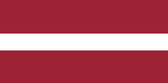
Latvia, a Baltic nation tucked between Lithuania and Estonia, is known for its medieval towns, sweeping forests, and wide sandy beaches. Riga, the capital, charms visitors with its UNESCO-listed Old Town and striking Art Nouveau architecture. The country balances its cultural heritage with modern European living, offering a blend of tradition, nature, and contemporary city life.
Latvia lies along the Baltic Sea, bordered by Estonia, Lithuania, Russia, and Belarus. The landscape is mostly flat with lowlands, lakes, and forests covering more than half the territory. The Gauja National Park and Baltic coastline are among its natural highlights, while the Daugava River runs through Riga before reaching the sea.
Riga International Airport is the main gateway, with frequent connections across Europe. The country has good bus links to neighbouring states, and trains connect major Latvian cities. Within Riga, trams, buses, and trolleybuses make getting around simple and affordable. Outside the capital, car hire is a good option for exploring rural areas and the scenic coastline.
As an EU and Schengen member, Latvia allows UK citizens and many others visa-free entry for up to 90 days in any 180-day period. Longer stays for work, study, or residence require the relevant visa or permit. The British Embassy is based in Riga.
Latvia uses the euro (EUR). Card payments are widely accepted, and ATMs are common in towns and cities. Cash is still useful in smaller villages and rural areas. The cost of living is generally lower than in Western Europe, making Latvia an affordable destination for travellers.
Healthcare in Latvia is improving but can vary in quality between urban and rural areas. Riga has the best-equipped hospitals and clinics. EU residents can use an EHIC/GHIC for necessary treatment, but comprehensive travel insurance is strongly recommended to cover private care and medical evacuation if needed. Pharmacies are common in cities and towns.