Need help?
UK Customer Services0330 880 3600*
Open Monday to Friday 9:00am to 5pm, Saturday 8:30am to 4pm and closed Sundays.
*Calls are recorded for training and quality purposes.
Go back to:
All Country Guides
Other Guides
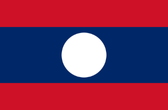
Laos
Please note that if the Foreign, Commonwealth and Development Office have advised against all (or all but essential travel) to your destination, we cannot provide cover.
Click here to visit the FCDO's Foreign Travel Advice webpage.
- Intro
- Geography
- Travel
- Embassies & Visas
- Currency
- Health
Quick Facts
Official name: Lao People’s Democratic Republic
Capital city: Vientiane
Languages spoken: Lao,French, Englis
Population: Around 7.7 million
Currency: Lao kip (LAK)
Time zone: GMT+7
Driving side: Right
Climate: Hot and humid most of the year, with a sticky rainy season and a cooler, drier spell from November to February
Laos is a landlocked country in Southeast Asia, known for its laid-back pace, stunning Mekong River landscapes, and Buddhist heritage. While tourism is growing, it remains less developed than its neighbours, giving it an off-the-beaten-path charm. Travellers should be aware that infrastructure is limited, and political freedoms are tightly controlled under a one-party system, though the country is generally stable and safe for visitors.
Laos is bordered by China, Vietnam, Cambodia, Thailand, and Myanmar. Around three-quarters of the country is mountainous, with dense forests and winding rivers shaping much of its terrain. The Mekong River runs the length of the western border, playing a central role in transport and agriculture. Rural communities are scattered across highlands and valleys, while Vientiane and Luang Prabang remain the main urban centres.
Most visitors arrive via Vientiane’s Wattay International Airport or Luang Prabang Airport, with regional flights from Bangkok, Hanoi, and other hubs. Travel within the country is slow but scenic, with buses, minibuses, and riverboats the most common options. Roads can be rough outside cities, and mountain routes are prone to landslides in the rainy season. Domestic flights provide quicker access between major towns.
UK travellers require a visa for entry to Laos, which can be obtained online via an eVisa system or on arrival at major entry points. Passports must be valid for at least six months. The British Embassy in Laos is represented by the British Embassy in Bangkok, though there is an honorary consulate in Vientiane.
The Lao kip (LAK) is the national currency, though US dollars and Thai baht are also widely used, especially in tourist areas. Cash is essential outside main cities, as ATMs are limited in rural regions. Credit card use is growing but still rare beyond larger hotels and restaurants.
Healthcare in Laos is basic and limited outside major towns. Medical facilities are not up to Western standards, and serious illness or injury usually requires evacuation to Thailand. Dengue fever and malaria are present, especially in rural areas, so mosquito precautions are essential. Safe drinking water is not guaranteed – stick to bottled or boiled water. Comprehensive travel insurance, including evacuation cover, is highly recommended.