Need help?
UK Customer Services0330 880 3600*
Open Monday to Friday 9:00am to 5pm, Saturday 8:30am to 4pm and closed Sundays.
*Calls are recorded for training and quality purposes.
Go back to:
All Country Guides
Other Guides
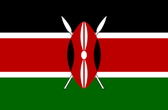
Kenya
Please note that if the Foreign, Commonwealth and Development Office have advised against all (or all but essential travel) to your destination, we cannot provide cover.
Click here to visit the FCDO's Foreign Travel Advice webpage.
- Intro
- Geography
- Travel
- Embassies & Visas
- Currency
- Health
Quick Facts
Official name: Republic of Kenya
Capital city: Nairobi
Languages spoken: Swahili, English
Population: Around 55 million
Currency: Kenyan shilling (KES)
Time zone: GMT+3
Driving side: Left
Climate: Tropical on the coast, arid in the north, temperate in the highlands with cooler evenings
Kenya is world-famous for its wildlife safaris, with the Maasai Mara, Amboseli, and Tsavo among the best-known reserves. Beyond safaris, the country offers pristine Indian Ocean beaches, striking mountain scenery around Mount Kenya, and the bustling capital of Nairobi. While Kenya is politically stable compared with some neighbours, security risks do exist in parts of the country, particularly near the Somali border and in certain urban areas, so travellers should stay updated via FCDO advice.
Kenya straddles the equator in East Africa, bordered by Tanzania, Uganda, South Sudan, Ethiopia, and Somalia, with the Indian Ocean to the east. The Great Rift Valley runs north to south through the country, dotted with lakes and volcanic peaks. Fertile highlands contrast with dry savannah and semi-arid deserts in the north, while the coastline offers coral reefs and long sandy beaches.
Most international visitors arrive at Jomo Kenyatta International Airport in Nairobi or Moi International Airport in Mombasa. Domestic flights are common for covering long distances quickly, while buses and matatus (shared minivans) are cheap but crowded. Rail travel has improved thanks to the Standard Gauge Railway between Nairobi and Mombasa. Road conditions vary, with city traffic heavy and rural driving more challenging. Safari lodges often arrange transfers for guests.
UK travellers and many other nationals require an eVisa to enter Kenya, which should be obtained online before arrival. Tourist visas are typically valid for up to 90 days. The British High Commission is located in Nairobi, providing assistance to UK nationals.
The currency is the Kenyan shilling (KES). Credit cards are accepted in major hotels, lodges, and larger restaurants, but cash is necessary in rural areas and for smaller purchases. ATMs are widespread in towns and cities. Bargaining is common in local markets.
Kenya’s healthcare facilities range from well-equipped private hospitals in Nairobi and Mombasa to very limited services in rural areas. Comprehensive travel insurance is essential, ideally covering evacuation. Malaria is present in many parts of the country, particularly along the coast and in low-lying regions, so prophylaxis is strongly recommended. Tap water is not safe to drink — stick to bottled or boiled water. Vaccinations for yellow fever, hepatitis A, and typhoid should be up to date.