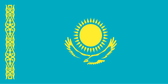
Kazakhstan flag Kazakhstan
Following the breakup of the Soviet Union in 1991 Kazakhstan saw demand for the country's traditional heavy industry products collapse, resulting in a sharp contraction of the economy. Since independence, there has been major foreign investment in the Caspian oil sector. Free-market reforms and generous foreign investment in the vast energy sector have helped make Kazakhstan one of the most economically successful post-Soviet states, with annual economic growth of almost 10 percent the past several years. However, the Kazakh economy lacks transparency and is dominated by the less-stable raw materials sector. Oil development has brought rapid economic growth. An oil pipeline linking the Tengiz oil field in western Kazakhstan to the Russian Black Sea port of Novorossiysk opened in 2001. There are plans to escalate oil exports by linking Kazakh resources to the Baku-Tbilisi-Ceyhan pipeline which began operating in summer 2005. A pipeline to China was opened in late 2005 and other routes are also being explored. Nevertheless, poverty is still widespread and Kazakhstan continues to face major economic challenges, particularly with unemployment and inflation. Kazakhstan is also facing increasing drug addiction and a growing incidence of HIV/Aids. At the same time, an elite group of people have grown very rich since independence through privatization and other business deals which opposition figures allege to have been corrupt. Soviet-era toxic waste dumping left a legacy of pollution, and inefficient irrigation projects have led to severe shrinkage of the heavily polluted Aral Sea. Kazakhs make up over half the population, Russians just over a quarter; smaller minorities of Ukrainians, Germans, Chechens, Kurds, Koreans and Central Asian ethnic groups account for the rest. These groups generally live in harmony, though ethnic Russians resent the lack of dual citizenship and having to pass a Kazakh language test in order to work for government or state bodies. Nursultan Abish-uly Nazarbayev came to power in 1989 as first secretary of the Communist Party of Kazakhstan and was elected president the following year. He was re-elected after the break-up of the Soviet Union in 1991. Despite advocating democracy, Nazarbayev is accused of suppressing dissent, and has concentrated extensive powers in his own hands and extended his tenure - first, by virtue of a referendum in 1995, which extended his term of office until 2000, and then in the 1999 election for a 5 year term, after a major opposition contender was barred on a technicality. Elections in December 2005 returned Nazarbayev for a further seven-year term with over 90% of the votes. The opposition protested that the ballot had been rigged and foreign observers declared it to have been seriously flawed. Nazarbayev regularly replaces his prime ministers as he tries to secure his position and balance interests of various powerful elite groups. Daniyal Akhmetov, who had served as prime minister since 2003, resigned in January 2006, in the wake of criticism of his performance by the president. No reason was given for the move, which was to lead to the appointment of a new government. Akhmetov had come under Nazarbayev's criticism for poor strategic planning, overspending and other mistakes. Following his re-election in 2005, Nazarbayev weakened Akhmetov's role in his Cabinet. In 2000, the government of Kazakhstan completed its move to the new capital Astana. Many foreign embassies are still located in Almaty, which remains the country's largest city, business center and transportation hub.
Security concerns for visitors and expatriates in Kazakhstan were raised after the incursions of Islamic extremists in the summer of 2000 in neighboring Tajikistan and Kyrgyzstan. In August 2000 President Nursultan Nazarbayev issued a nationwide alert to counter the threat, but there have been no indications of actual attempts by the extremists to enter Kazakhstan. It should be noted, however, that supporters of extremist groups such as the Islamic Jihad Group, the Islamic Movement of Uzbekistan, Al-Qaeda, and the Eastern Turkistan Islamic Movement remain active in Central Asia. Kazakhstan was a strong supporter of the US-led effort to fight terrorism and oust the Taliban from power in Afghanistan in 2001. Identification checks by the police are common practice. Visitors must produce either a passport or an embassy-certified copy upon request. U.S. citizens are permitted in the Almaty Oblast to carry a certified copy of their passport and visa rather than the original. Be wary of persons representing themselves as police or other local officials. It is not uncommon for travelers to become victims of harassment and extortion by law enforcement and other officials. A genuine police official should always present his own credentials when approaching someone on the street. If the officer cannot produce identification, he is most likely not a real police officer. Never voluntarily hand over your wallet to a police officer. Tell the officer that you will report his behavior to the U.S. Embassy and his supervisors. Try to obtain the officer's name, badge number, and license plate number, and note where the incident happened because this information assists local officials in identifying the perpetrators. Kazakh security personnel may at times place foreign visitors under surveillance. Hotel rooms, telephones and fax machines may be monitored, and personal possessions in hotel rooms may be searched. Taking photographs of anything that could be perceived as being of military or security interest may result in problems with authorities. Travel to certain areas bordering China and cities in close proximity to military installations requires prior government permission. In 2001, the government declared the following areas closed to foreigners: Gvardeyskiy village, Rossavel village, and Kulzhabashy railway station in Zhambyl Oblast; Bokeyorda and Zhangaly districts in Western Kazakhstan Oblast; the town of Priozersk and Gulshad village in Karaganda Oblast; and Baykonur, Karmakshy, and Kazakly districts in Kyzylorda Oblast. Foreigners traveling within Kazakhstan have on occasion reported local officials demanding documentation authorizing travel within their area of jurisdiction, even though they had received permission from the Department of Migration Police (currently part of the Ministry of Internal Affairs). There are also local Kazakhstani registration requirements. All travelers staying for more than five calendar days must register with the Office of Visas and Registration (OVIR) within that time period. OVIR offices are located in Almaty, Astana, and all other major cities. Visitors who do not register will be fined and their departure may be delayed. All visitors who plan to stay more than 30 days must also present to the OVIR office within 30 days of arrival a certificate indicating a negative HIV test conducted no more than one month before registration. Evidence of an HIV test performed abroad is acceptable. Testing may also be done at the Center for the Prevention and Control of AIDS at 7 Talgarskaya Street in Almaty. Corruption at the airport in Almaty has been reported. Some foreigners have been told by customs or border guard officials that they must pay a US$50-$500 fine for "violating" undisclosed local regulations, despite the fact that the foreign citizen has fully complied with local laws. Please see “Crime” below for more information on security incidents at the airport.