Need help?
UK Customer Services0330 880 3600*
Open Monday to Friday 9:00am to 5pm, Saturday 8:30am to 4pm and closed Sundays.
*Calls are recorded for training and quality purposes.
Go back to:
All Country Guides
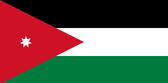
Jordan
Please note that if the Foreign, Commonwealth and Development Office have advised against all (or all but essential travel) to your destination, we cannot provide cover.
Click here to visit the FCDO's Foreign Travel Advice webpage.
- Intro
- Geography
- Travel
- Embassies & Visas
- Currency
- Health
Quick Facts
Official name: Hashemite Kingdom of Jordan
Capital city: Amman
Languages spoken: Arabic (official), English widely understood
Population: Around 11 million
Currency: Jordanian dinar (JOD)
Time zone: GMT+2 (GMT+3 during summer)
Driving side: Right
Climate: Hot and dry summers, cooler winters with rain in the west, desert conditions in the east and south
Jordan is a country of desert landscapes, ancient ruins, and remarkable hospitality. Home to Petra - one of the New Seven Wonders of the World - and the dramatic sands of Wadi Rum, it blends deep history with natural beauty. Amman is a bustling modern capital, while the Dead Sea and Aqaba provide unique natural escapes. Politically, Jordan is relatively stable compared to many of its neighbours, but regional tensions and its proximity to conflict zones can affect the security situation, so travellers should stay updated with the latest advice.
Jordan is bordered by Saudi Arabia, Iraq, Syria, Israel and the Palestinian territories, with access to the Red Sea at Aqaba. Its terrain is dominated by desert plateaus, fertile valleys in the west, and the dramatic Jordan Rift Valley, which includes the Dead Sea — the lowest point on Earth. The landscape is stark but striking, with wadis, mountains and canyons that attract adventurers and history enthusiasts alike.
Queen Alia International Airport near Amman is the main entry point, with additional flights through Aqaba. Public transport is limited; taxis, private drivers, or organised tours are the most practical ways to get around. Driving is possible, but roads can be chaotic in cities. Long-distance buses connect major towns and tourist sites.
UK citizens can obtain a visa on arrival at most entry points, including airports and land borders, or apply in advance. Visas are usually valid for 30 days. The British Embassy is in Amman, with consular services available for UK nationals. Travellers planning to visit multiple sites may benefit from the Jordan Pass, which combines entry fees with visa costs.
The Jordanian dinar (JOD) is the local currency. ATMs are widely available in cities and tourist areas, and credit cards are accepted in hotels, restaurants, and shops. Cash is recommended for small towns and rural areas. Jordan is more expensive than many of its neighbours, especially in popular tourist areas, but still good value compared to Western Europe.
Healthcare in Amman and other major cities is of a reasonable standard, with private hospitals often offering the best care. Rural areas may have limited facilities. Tap water is not recommended for drinking; bottled or boiled water is safest. Travel insurance should cover medical treatment and evacuation if necessary. Vaccinations for hepatitis A, typhoid and routine boosters are advised, and precautions against heat and sun exposure are essential when travelling in desert regions.