Need help?
UK Customer Services0330 880 3600*
Open Monday to Friday 9:00am to 5pm, Saturday 8:30am to 4pm and closed Sundays.
*Calls are recorded for training and quality purposes.
Go back to:
All Country Guides
Other Guides
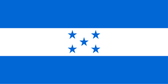
Honduras
Please note that if the Foreign, Commonwealth and Development Office have advised against all (or all but essential travel) to your destination, we cannot provide cover.
Click here to visit the FCDO's Foreign Travel Advice webpage.
- Intro
- Geography
- Travel
- Embassies & Visas
- Currency
- Health
Quick Facts
Official name: Republic of Honduras
Capital city: Tegucigalpa
Languages spoken: Spanish, indigenous and Garifuna languages in some communities
Population: Around 10.5 million
Currency: Honduran lempira (HNL)
Time zone: GMT-6
Driving side: Right
Climate: Tropical, with a wet season from May to November and a drier period from December to April. Coastal regions are hot and humid, while the highlands are cooler and more temperate.
Honduras is a Central American nation bordered by the Caribbean Sea and the Pacific Ocean, known for its mountainous landscapes, ancient Mayan ruins, and long stretches of palm-fringed beaches. The Bay Islands, just off the Caribbean coast, are famous for diving on the Mesoamerican Barrier Reef, while inland you’ll find cloud forests, wildlife reserves, and colonial towns. Despite its natural beauty, Honduras faces challenges with security, and visitors are advised to take extra care.
Honduras shares borders with Guatemala, El Salvador, and Nicaragua, with coastlines along both the Caribbean Sea and the Pacific’s Gulf of Fonseca. The country is largely mountainous, with fertile valleys and tropical lowlands along the coasts. The Mosquito Coast in the east is particularly remote and difficult to access. Natural hazards include hurricanes, tropical storms, and periodic flooding, especially during the rainy season.
Toncontín International Airport in Tegucigalpa and Ramón Villeda Morales International Airport in San Pedro Sula are the main international gateways, with additional flights to the Bay Islands. Domestic travel is possible by bus and plane, though road conditions can be poor outside major highways. Ferries operate between the mainland and islands like Roatán and Utila. Public transport in cities is often informal, and taxis should be arranged in advance or through reputable companies.
UK citizens do not need a visa for stays of up to 90 days. Passports must be valid for at least six months on arrival. Extensions can be arranged locally. The British Embassy in Tegucigalpa provides limited consular services.
The Honduran lempira (HNL) is the national currency. US dollars are widely accepted in tourist areas, especially in the Bay Islands. ATMs are available in larger towns and cities, though less reliable in rural areas. Credit cards are accepted at hotels and larger businesses, but cash is essential when travelling more remotely.
Healthcare in Honduras varies significantly. Major cities and tourist destinations have private hospitals and clinics, but facilities are basic elsewhere. Mosquito-borne illnesses such as dengue, Zika, and chikungunya are present, and malaria is a risk in some areas. Visitors should drink bottled or purified water and ensure routine vaccinations are up to date. Comprehensive travel insurance, including medical evacuation, is strongly advised.