
Need help?
UK Customer Services0330 880 3600*
Open Monday to Friday 9:00am to 5pm, Saturday 8:30am to 4pm and closed Sundays.
*Calls are recorded for training and quality purposes.
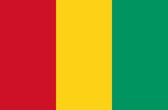
Guinea
Please note that if the Foreign, Commonwealth and Development Office have advised against all (or all but essential travel) to your destination, we cannot provide cover.
Click here to visit the FCDO's Foreign Travel Advice webpage.
- Intro
- Geography
- Travel
- Embassies & Visas
- Currency
- Health
Quick Facts
Official name: Republic of Guinea
Capital city: Conakry
Languages spoken: French, Susu, Pular, Maninka
Population: Around 14 million
Currency: Guinean franc (GNF)
Time zone: GMT+0
Driving side: Right
Climate: Hot and humid year-round, with a long rainy season from May to October and a drier, slightly cooler spell from November to April
Guinea, on West Africa’s Atlantic coast, is a resource-rich country known for its bauxite reserves, rainforest landscapes, and vibrant traditions. Its capital, Conakry, is a bustling port city, while the Fouta Djallon highlands, savannahs, and tropical forests showcase the country’s natural variety. Despite its potential, Guinea remains underdeveloped, offering adventurous travellers an authentic and challenging experience.
Guinea borders Guinea-Bissau, Senegal, Mali, Côte d’Ivoire, Liberia and Sierra Leone, with a broad Atlantic coastline. The terrain shifts from coastal mangroves to central highlands and mountainous areas, including Mount Nimba on the border with Côte d’Ivoire and Liberia. The Niger, Senegal and Gambia rivers all have their sources in Guinea’s highlands, giving the country an important regional role in water supply.
Conakry International Airport is the main gateway, with flights to regional hubs and Europe. Roads across the country are often in poor condition, particularly during the rainy season, and public transport is basic and unreliable. Shared taxis and minibuses are the main forms of travel within towns, while overland journeys require patience and planning.
Most visitors, including UK nationals, need a visa to enter Guinea, usually arranged in advance from a Guinean embassy or consulate. Passports should be valid for at least six months beyond the date of entry. The British Embassy in Conakry is able to provide consular assistance.
The Guinean franc (GNF) is the national currency. ATMs are scarce, and credit card use is extremely limited, so travellers should carry sufficient cash. US dollars and euros are the most practical foreign currencies for exchange.
Healthcare facilities in Guinea are very limited, with shortages of medicines and equipment common. Serious medical cases usually require evacuation. Yellow fever vaccination is mandatory, and malaria is widespread, so mosquito precautions are essential. Travellers should also take care with food and water hygiene, as cholera and other waterborne illnesses occur. Comprehensive medical travel insurance with evacuation cover is strongly recommended.