Contact Us   |   FAQ   |   Site Map   |   News and Press
Direct Travel Insurance
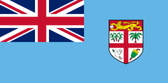
Fiji flag Fiji
Fiji, made up of over 800 volcanic and coral islands with a tropical climate, is a prime tourist destination, but since 1987 racial and political tensions have been an intermittent source of instability and international isolation. Informal segregation still runs deep at almost every level of Fijian society. There are also very small non-Indo-Fijian, non-Fijian minority communities, such as Chinese and Rotumans. Democratic rule was interrupted by two military coups in 1987, caused by concern over a government perceived as dominated by the Indian community (descendants of contract laborers brought to the islands by the British in the 19th century). After further nationalist discontent, another coup in 2000, led by businessman George Speight, saw the country's first ethnic Indian prime minister, his cabinet and several MPs held hostage for several weeks. These events dealt severe blows to the economy - the tourism industry in particular - and Fiji's international reputation. Bitterness over the 2000 coup persists, with deep divisions over proposals to amnesty those behind it. A 1990 constitution favored native Melanesian control of Fiji, but led to heavy Indian emigration; the population loss resulted in economic difficulties. Due to emigration, Melanesians became the majority. Amendments enacted in 1997 made the constitution more equitable. President Ratu Iloilo was re-elected for another five years in March 2006. He ran unopposed, resisting calls from some tribal chiefs to not seek a second term. He was vice-president at the time Prime Minister Mahendra Chaudhry, cabinet members and MPs were taken hostage in the 2000 coup. He was nominated as president after the crisis was resolved in July that year. He pledged to bring national unity to Fiji. Laisenia Qarase, from the mainly-indigenous Soqosoqo Duavata Lewenivanua (SDL) party, secured a second, five-year term in May 2006, in closely-fought elections that were polarized along racial lines. Qarase first came to power in 2001 in elections which marked a return to parliamentary democracy. The prime minister's controversial proposal to pardon or amnesty some of those behind the 2000 nationalist coup angered the opposition and the military. Qarase argued that the plan was aimed at uniting the country. On December 5 2006, the military seized control of Fiji after weeks of threats, locking down the capital with armed troops and isolating at home the elected leader whose last-minute pleas for help from foreign forces were rejected. This was was the fourth armed takeover in Fiji in 19 years, and had its roots in the same ethnic divide that produced the previous three. Commodore Frank Bainimarama, the armed forces chief, announced in a nationally broadcast evening statement that he had assumed some powers of the president and was using them to dismiss Qarase. He named Dr. Jona Senilagakali, a military medic with no political experience, as caretaker prime minister and said a full interim government would be appointed in the following week to see the country through to elections that would restore democracy sometime in the future. The move was denounced by elected officials and the president, the police force, and countries and international organizations with connections with Fiji. New Zealand announced it was suspending defense ties with Fiji and would ban its military officers from traveling to the country. (Bainimarama is believed to have children living in New Zealand.) Britain also announced it was suspending military aid to Fiji, and Don McKinnon, the secretary general of 53-member Commonwealth of Britain and its former colonies, said Fiji was likely to be suspended from the group. Australia said it would impose similar measures soon. Australian Prime Minister John Howard revealed that Qarase had asked him early on December 5 to send troops to Fiji to try to stop the coup. Howard refused: "I did not think it was in Australia's national interest to become involved. The possibility of Australian and Fijian troops firing on each other in the streets of Suva was not a prospect that I for a moment thought desirable," he told reporters. As tensions built in preceding weeks, Australia sent three navy ships to waters off Fiji to evacuate Australian citizens in the event of a coup. Bainimarama, however, accused Australia of planning an invasion, and had troops fire mortar flares over the harbor and set up security checkpoints around government buildings in a show of force. Fiji's economy is weak with growth at 1.7% (projected to reach 2% in 2006). The country relies heavily on the sugar and tourism industries for its foreign exchange; several major new tourism projects are underway, with others at an advanced planning stage. The economy is diversified, but other than tourism and inbound remittances, other sectors are performing weakly. Gold, silver and limestone are mined, and there is a strong services sector and some light manufacturing. Fiji has been hampered by persistent trade and budget deficits, making it one of the world's largest per capita recipients of aid. Fiji's third largest source of foreign currency is now remittances from Fijians living overseas. The Reserve Bank estimates remittances to total Fiji $450 million a year (£150 million), and it is expected to soon outstrip sugar and become Fiji’s second largest source of foreign income. Fiji is a member of the UN, and is a major contributor for troops to take part in peacekeeping operations world-wide (including Iraq). Fiji is a member of the ACP (Africa, Caribbean & Pacific) grouping, and held the APC Presidency in 2002. Under the Cotonou Agreement, Fiji is eligible for development assistance from the European Union.
In October 2006, the Fiji Military Commander issued an ultimatum demanding that the government resign during November; when the government failed to meet a number of demands, the commander led a coup (see "Background" above). Although the coup took place without violence, the security situation in Suva could therefore deteriorate at short notice. Exercise caution if travelling to the rest of Fiji, particularly in urban areas. Avoid all military or political rallies and stay informed of developments. Especially avoid prominent government buildings, such as the National Parliament, as well as all military installations and concentrations of military personnel. The threat from terrorism is low; crime is a more significant concern (see “Crime” below). Since the September 11 attacks in the US, security at Nadi International Airport has been tightened, and check-in processes can be prolonged. If you plan to hire a car, note that traffic discipline can be poor (see also “Crime” below). The national maximum speed limit is 50 mph (80 kmph) but this is often ignored and road deaths are increasing (from 41 in the first eight months of 2005 to 60 during the same period in 2006), mostly as a result of reckless driving. Night-time driving, particularly on the road between Nadi and Suva, is considered to be particularly hazardous, as animals wander or sleep on the road and accidents are frequent. Some organizations ban their staff from using the road after dark. If you must use taxis or buses, it is advisable to use one with a yellow registration plate, which denotes recent compliance with Land Transport Authority (LTA) regulations. Fiji is vulnerable to several forms of natural distaster. Flash floods resulting in landslides and road blockages are not uncommon. The cyclone season in Fiji normally runs from November to April. The islands are affected occasionally but there is a warning system in operation. Most hotels are well equipped for these occasions. Fiji is in an earthquake zone and suffers from tremors time to time. In May 2006, an earthquake measuring 8.0 on the Richter scale was recorded 95 miles off the coast of Tonga. Tsunami alerts were put in place for Tonga, Fiji, New Zealand, Samoa and Hawaii. There are dangerous rip tides along the reefs and river estuaries. Wear the appropriate safety equipment before going out to the reefs or engaging in water sports and take local advice on safety. There have been shark attacks in some waters. Topless bathing and nudity in public are forbidden. In the outer islands, there is a lack of communication facilities generally, and coverage by the mobile phone network is patchy. You may be invited to participate in the local ceremony of drinking kava. Be aware of related health concerns.