Need help?
UK Customer Services0330 880 3600*
Open Monday to Friday 9:00am to 5pm, Saturday 8:30am to 4pm and closed Sundays.
*Calls are recorded for training and quality purposes.
Go back to:
All Country Guides
Other Guides
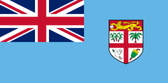
Fiji
Please note that if the Foreign, Commonwealth and Development Office have advised against all (or all but essential travel) to your destination, we cannot provide cover.
Click here to visit the FCDO's Foreign Travel Advice webpage.
- Intro
- Geography
- Travel
- Embassies & Visas
- Currency
- Health
Quick Facts
Official name: Republic of Fiji
Capital city: Suva
Official language: Fijian, English, Fiji Hindi
Population: Around 940,000
Currency: Fijian dollar (FJD)
Time zone: GMT+12 (GMT+13 in summer)
Driving side: Left
Climate: Tropical marine climate with a warm, humid wet season (November–April) and a cooler, drier season (May–October)
Fiji, an island nation in the South Pacific, is famous for its white-sand beaches, turquoise lagoons, and world-class diving. Spread across more than 300 islands, only about a third are inhabited, with Viti Levu and Vanua Levu home to most of the population. Visitors come for relaxation, water sports, and vibrant Fijian culture, where hospitality and tradition are central to everyday life. The capital, Suva, combines colonial architecture with a lively port atmosphere.
Fiji lies east of Australia and north of New Zealand, scattered across the South Pacific Ocean. The islands are mostly volcanic in origin, with rugged interiors and coastal plains. Viti Levu contains the highest point, Mount Tomanivi at 1,324 metres. The islands are surrounded by coral reefs, making Fiji one of the world’s top diving and snorkelling destinations. Natural hazards include tropical cyclones, most likely between November and April.
Nadi International Airport on Viti Levu is the main entry point, with direct flights from Australia, New Zealand, the US, and Asia. Domestic flights, ferries, and buses connect the islands, though journeys can be weather-dependent. Driving is on the left, but roads outside major towns can be rough and slow. Many visitors rely on hotel transfers, ferries, or small aircraft to reach resorts on outer islands.
UK nationals do not need a visa for stays of up to four months. Passports should be valid for at least six months beyond the date of entry. Longer stays or work and study require appropriate permits. Fiji has diplomatic representation in London, while the British High Commission in Suva provides assistance to UK travellers.
The Fijian dollar (FJD) is the national currency. Credit cards are widely accepted in hotels, resorts, and larger shops, though smaller villages and markets often prefer cash. ATMs are available in towns and tourist areas. Fiji is generally affordable compared with some Pacific island destinations, but imported goods can be expensive.
Fiji’s medical facilities are limited compared with Western standards, especially outside Suva and Nadi. Private clinics provide reasonable care, but serious cases may require evacuation to New Zealand or Australia. Comprehensive travel insurance is essential. Tap water is safe to drink in major hotels, but bottled water is recommended in rural areas. Mosquito-borne illnesses such as dengue fever can occur, so insect repellent and protective clothing are advised.