Need help?
UK Customer Services0330 880 3600*
Open Monday to Friday 9:00am to 5pm, Saturday 8:30am to 4pm and closed Sundays.
*Calls are recorded for training and quality purposes.
Go back to:
All Country Guides
Other Guides
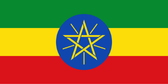
Ethiopia
Please note that if the Foreign, Commonwealth and Development Office have advised against all (or all but essential travel) to your destination, we cannot provide cover.
Click here to visit the FCDO's Foreign Travel Advice webpage.
- Intro
- Geography
- Travel
- Embassies & Visas
- Currency
- Health
Quick Facts
Official name: Federal Democratic Republic of Ethiopia
Capital city: Addis Ababa
Official language: Amharic
Population: Around 126 million
Currency: Ethiopian birr (ETB)
Time zone: GMT+3
Driving side: Right
Climate: Diverse, ranging from highland temperate zones to arid deserts and tropical lowlands
Ethiopia is Africa’s oldest independent country and a land of striking contrasts. From the highlands around Addis Ababa to the Danakil Depression, one of the hottest places on Earth, the country offers dramatic landscapes and deep history. It is often described as the cradle of humanity due to its archaeological sites, including Lucy, one of the oldest hominid skeletons ever found. Visitors are drawn to Ethiopia’s unique culture, Orthodox Christian traditions, ancient rock-hewn churches, and vibrant coffee heritage.
Ethiopia is a landlocked country in the Horn of Africa, bordered by Eritrea, Djibouti, Somalia, Kenya, South Sudan and Sudan. The Ethiopian Highlands dominate much of the landscape, separated by the Great Rift Valley. The highest point is Ras Dashen at 4,550 metres, while the Danakil Depression dips below sea level. Its varied geography results in equally varied climates, from cool mountain air to scorching desert heat.
Addis Ababa Bole International Airport is the main gateway, with Ethiopian Airlines offering extensive connections across Africa and beyond. Road conditions vary, with good highways between major towns but rougher routes in rural areas. Domestic flights are popular for covering long distances quickly. Visitors often travel to Lalibela for its rock-hewn churches, the Simien Mountains for trekking, or Lake Tana and the Blue Nile Falls for natural beauty.
UK citizens require a visa to enter Ethiopia, which can be obtained online as an e-visa or on arrival at Addis Ababa airport. Passports must be valid for at least six months. For consular support, the British Embassy is located in Addis Ababa. Travellers are strongly advised to check the latest entry requirements before travelling, as these can change at short notice.
The Ethiopian birr (ETB) is the national currency. Credit cards are increasingly accepted in Addis Ababa and larger hotels, but cash is essential in rural areas. Foreign currency can be exchanged at banks and authorised bureaus. Import and export of local currency is restricted, so travellers should declare foreign currency on arrival if carrying large sums.
Healthcare in Ethiopia is limited outside major urban centres. Facilities in Addis Ababa are better, but still below Western standards, and serious medical cases may require evacuation. Malaria is a risk in lowland and rural areas, and visitors should use prophylaxis. Yellow fever vaccination is required if arriving from an endemic country. Tap water is not safe to drink, and bottled or boiled water is strongly recommended. Comprehensive travel insurance including evacuation cover is essential.