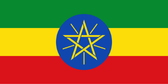
Ethiopia
Unique among African countries, the ancient Ethiopian monarchy maintained its freedom from colonial rule, one exception being the Italian occupation of 1936-41. In the first part of the 20th century Ethiopia forged strong links with the United Kingdom; UK troops helped evict the Italians in 1941 and put Emperor Haile Selassie back on his throne. During the 1960s and early 1970s British influence gave way to that of the United States, which in turn was supplanted by the USSR. In 1974 a military junta, the Derg, deposed Emperor Selassie and established a socialist state. Thousands of political dissidents were purged or killed, property was confiscated and defense spending spiraled. Torn by bloody coups, uprisings, wide-scale drought, and massive refugee problems, the regime was finally toppled by a coalition of rebel forces, the Ethiopian People's Revolutionary Democratic Front (EPRDF), in 1991. A constitution was adopted in 1994 and Ethiopia's first multiparty elections were held in 1995.
Prime Minister Meles Zenawi joined the fight against the Mengistu regime in the 1970s. Initially a Marxist-Leninist, by the 1990s he had become a proponent of the free market and parliamentary democracy. Upon Mengistu's overthrow, he was chosen as transitional head of state and was one of the architects of the 1994 constitution, which provided for a federal republic with ethnically-based regions. In 1995 he became Prime Minister, with the post of titular head of state being taken up by Gidada Negaso. In May 2000 Meles's Ethiopian People's Revolutionary and Democratic Front won the general election, taking 472 of the 522 seats; the eight opposition parties complained that the poll was disrupted by harassment.
In October 2001, Lieutenant Girma Wolde Giorgis, who is unknown to much of Ethiopia's population, was unanimously elected to the largely ceremonial post of President by both houses of parliament to replace Gidada Negaso.
A border war with Eritrea that broke out in 1998 strengthened the ruling coalition, but hurt the nation's economy. A fragile truce has held, but the UN has warned that continuing disputes over the demarcation of the border threaten peace. Demarcation of the disputed Eritrean-Ethiopian 620-mile (1,000-km) border has been indefinitely postponed since Ethiopia rejected in 2003 decision by an independent boundary commission that the village of Badme should be part of Eritrea. Eritrea has called for sanctions to force Ethiopia to accept the ruling, which was supposed to be "final and binding" under the terms of the peace deal that ended the border conflict. The flashpoint in the dispute is the village of Badme. In an issue that is seldom addressed, however, Eritrea retained its entire coastline along the Red Sea upon independence from Ethiopia in 1993, leaving Ethiopia landlocked. In one example of the tensions that remain between the two countries, Ethiopia turned down an offer from Eritrea to use its well-equipped Assab harbor for import and export. Ethiopia prefers instead to use the railway link to the port of Djibouti, despite periodic bombings on the railway by unidentified attackers.
Ethiopia remains one of the continent's poorest countries, with a very low income per capita and nearly 65 percent illiteracy rates. The economy is highly dependent on agriculture, which in turn is almost entirely dependent on rainfall; repeated droughts have forced many Ethiopians to rely on food aid from abroad.
Travelers and expatriate residents in Ethiopia should be aware that the country's abject poverty, location between the terminally unstable countries of Sudan and Somalia and tensions from the border war with Eritrea poise significant risks in some regions of the country.
Although Ethiopia and Eritrea finalized a peace treaty in February 2001 favorable to Ethiopia, travelers should exercise caution in the northern Tigray and Afar regions (within 50km/30 miles of the Ethiopian/Eritrean border) because of land mines and unsettled conditions in the border area.
Armed attacks, apparently targeting foreigners, have occurred in remote areas of Ethiopia. Particular caution should be used in Harar and Dire Dawa; travel to the Somali region and the Bale Zone of the Oromiya region should be deferred.
An Islamic militant group called al-Ittihad al-Islami (AIAI) was responsible for a series of bombings in Addis Ababa in 1996 and 1997, but it has since suffered heavy losses at the hands of the Ethiopian military. Centered in Somalia, the al-Qaida-affiliated group seeks to establish an Islamic state that would incorporate all of Somalia and portions of Ethiopia, Djibouti and Kenya. Despite Ethiopian efforts to control the long and porous border, AIAI retains a presence in eastern Ethiopia.
The U.S. Department of State continues to warn about the ongoing al-Qaida threat to East Africa. Islamic militants bombed the U.S. embassies in Nairobi, Kenya and Dar es Salaam Tanzania in 1998 and attacked an Israeli-owned hotel and passenger jet in Mombasa, Kenya, in November 2002.
Domestic terrorist groups are also active, and the Ethiopian government blames the Oromo Liberation Front (OLF) for a bomb blast that wrecked the Tigray hotel in Addis Ababa during Ethiopian New Year celebrations in September 2002. The group, which fights for greater autonomy for the Oromo region, also may be responsible for a grenade attack against a bar in the small Segen Hotel, in July 2003. A string of such attacks targeted places frequented by foreigners, including hotels, post offices and shopping centers in the capital. Hotels owned or operated by the government carry a particularly high risk. In the most significant attack in Addis Ababa in recent years, three coordinated grenade attacks were launched against public places in April 1997, killing one Ethiopian and injured numerous people, including several foreigners. In 1996, bombs at the government-owned Ghion and Wabe Shabelle Hotels killed five Ethiopians and wounded numerous Ethiopians and foreigners. There have been a string of grenade attacks in schools and universities, apparently as revenge killings for alleged harassment of ethnic Oromo students. From time to time, assailants conduct similar grenade attacks to settle personal or business disputes.
In April 2001 a flight from Addis Ababa was hijacked and flown to the Sudanese capital Khartoum. The incident ended peacefully when the hijackers, five military pilot trainees, surrendered in Khartoum. In June 2003, a sky marshal shot two would-be hijackers aboard a domestic Ethiopian Airlines flight from the northern city of Bah Dar bound for Addis Ababa. In January 2004, Ethiopian Airlines announced that it was beginning to place air marshals on flights to the United States.
The regime keeps a tight grip on dissent, which has given rise to tensions. In June 2005, Addis Ababa saw rioting over election results that handed victory to the ruling party. Protests began on June 6 following weeks of opposition charges that the ruling Ethiopian People's Revolutionary Democratic Front (EPRDF) intimidated voters and rigged the May elections, which were seen as a test of Prime Minister Zenawi's commitment to reform. A security crackdown led to violence when police and security forces fired into crowds of stone-throwing protestors on June 8, killing at least 26 people. Some opposition politicians were placed under house arrest. Taxis and private bus drivers, as well as shop owners in the capital, began a strike after two days of protests that mainly involved students. The strike took place despite government threats of retaliation, and in defiance of a government ban on protests after the elections. Arrests of opposition members continued well after the violence had subsided. The government commonly takes advantage of such situations to arrest opposition politicians. Police shot and killed an opposition politician, prompting the arrest of six officers, a government spokesman said on June 13, as the government rejected an opposition offer to renew a peace deal. The government said the peace deal would not work unless the opposition took further steps to end political violence that has left 37 dead.
In southern Ethiopia, along the Kenyan border, reports of banditry are not uncommon. Isolated incidents of violence have occurred in the vicinity of Lake Langano and Awassa. In eastern Ethiopia, two foreigners were killed and one wounded in daylight shooting incidents in Dire Dawa in October 1996. A February 1997 grenade attack at a hotel in Harar wounded five foreign nationals. In several of these incidents, the attacks appear to have targeted foreigners. Since the mid-1990's, there have also been several clashes between various opposition elements and government forces around Harar and in the Somali Regional State, particularly near the border with Somalia. The Awash-Mile Road has been the site of shootings, apparently by bandits operating at night or the pre-dawn hours.
In western Ethiopia, military units have skirmished on rare occasion with forces alleged to be of the Oromo Liberation Front (OLF) in the vicinity of Nekemte. The western-most tip of Gambella region is subject to political violence originating from Sudan and to inter-ethnic conflict. Visitors should seek current guidance from the U.S. Embassy in Addis Ababa or local officials before traveling to other areas along the Sudan border.
Incidents of banditry are not uncommon in the southernmost areas of Ethiopia, along the Kenyan border and as far north as Woleyita (former Sidamo province). Isolated incidents of violence have recently occurred in other regions as well, including the Lake Tana, Lake Langano, Awassa, and Arbaminch areas. There have also been sporadic reports of armed clashes between various opposition elements and government forces in Region 5 (Somalia border area). Border areas also hold the possibility of possible spillover conflict from Somalia. OLF elements claim that armed rebel units periodically clash with army forces in the western area of Nekemte (former Wollega province) and in the east, around Harar.
Travel in Ethiopia via rail is also strongly discouraged due to episodes of sabotage and derailment in recent years.