
Need help?
UK Customer Services0330 880 3600*
Open Monday to Friday 9:00am to 5pm, Saturday 8:30am to 4pm and closed Sundays.
*Calls are recorded for training and quality purposes.
Go back to:
All Country Guides
Other Guides
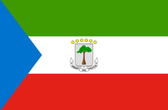
Equatorial Guinea
Please note that if the Foreign, Commonwealth and Development Office have advised against all (or all but essential travel) to your destination, we cannot provide cover.
Click here to visit the FCDO's Foreign Travel Advice webpage.
- Intro
- Geography
- Travel
- Embassies & Visas
- Currency
- Health
Quick Facts
Official name: Republic of Equatorial Guinea
Capital city: Malabo
Official language: Spanish, French, Portuguese
Population: Around 1.7 million
Currency: Central African CFA franc (XAF)
Time zone: GMT+1
Driving side: Right
Climate: Equatorial, hot and humid year-round, with heavy rainfall during the wet seasons
Equatorial Guinea is one of Africa’s smallest countries, divided between the mainland region of Río Muni and several islands, including Bioko where the capital Malabo is located. Though rich in oil and natural resources, it remains relatively undiscovered by mass tourism. Visitors can explore volcanic landscapes, tropical rainforests, colonial architecture, and unique cultural traditions blending Spanish and African influences.
The country consists of a mainland territory bordered by Cameroon and Gabon, and offshore islands in the Gulf of Guinea. Bioko Island, home to Malabo, is volcanic in origin, while Annobón lies further south and is sparsely populated. Much of the mainland is covered in dense tropical rainforest, with coastal plains giving way to hills and mountains inland. Its equatorial climate brings frequent rain and high humidity.
Malabo International Airport on Bioko Island is the main entry point, with connections to regional hubs. Bata Airport serves the mainland. Internal flights connect Malabo with Bata and Annobón, while ferries also operate between Bioko and the mainland. Roads are improving in some areas, but infrastructure outside major towns remains limited. Tourism is still developing, with highlights including the Monte Alén National Park, colonial-era buildings in Malabo, and the beaches of Ureka.
Most visitors, including UK citizens, require a visa to enter Equatorial Guinea, which must be obtained in advance from an embassy or consulate. A valid passport with at least six months’ validity is required. Proof of accommodation and return flights may be requested. The British Embassy in Malabo provides consular assistance, though services are limited due to the country’s small size and infrastructure.
The Central African CFA franc (XAF) is the official currency, shared with several neighbouring countries. Credit cards are not widely accepted, and ATMs are limited mainly to Malabo and Bata. Travellers should carry sufficient cash, preferably in euros, which can be exchanged at banks and hotels. Equatorial Guinea is an expensive destination compared with other African countries due to its reliance on imports.
Healthcare facilities are very limited outside Malabo and Bata. Even in major cities, standards may not meet those in Europe. Serious medical issues usually require evacuation. Malaria is a significant risk, and prophylaxis is strongly advised. Other risks include yellow fever, which requires proof of vaccination for entry, as well as dengue and other mosquito-borne diseases. Tap water is not safe to drink, so bottled or boiled water should be used. Comprehensive travel insurance with medical evacuation cover is essential.