Need help?
UK Customer Services0330 880 3600*
Open Monday to Friday 9:00am to 5pm, Saturday 8:30am to 4pm and closed Sundays.
*Calls are recorded for training and quality purposes.
Go back to:
All Country Guides
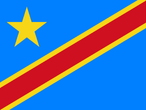
Democratic Republic of the Congo
Please note that if the Foreign, Commonwealth and Development Office have advised against all (or all but essential travel) to your destination, we cannot provide cover.
Click here to visit the FCDO's Foreign Travel Advice webpage.
- Intro
- Geography
- Travel
- Embassies & Visas
- Currency
- Health
Quick Facts
Official name: Democratic Republic of the Congo
Capital city: Kinshasa
Official language: French,Lingala, Swahili, Kikongo, Tshiluba
Population: Around 111 million
Currency: Congolese franc (CDF)
Time zone: GMT+1
Driving side: Right
Climate: Equatorial climate with hot, humid conditions in the central basin, wetter on the Atlantic coast and eastern highlands, and drier savannah in the south
The Democratic Republic of the Congo (DRC) is Africa’s second-largest country and one of its most resource-rich, with vast reserves of copper, cobalt, gold, and diamonds. Despite this wealth, the DRC has faced decades of conflict, political instability, and poverty. The capital, Kinshasa, is a sprawling city on the Congo River opposite Brazzaville in neighbouring Republic of the Congo. For travellers, the DRC offers extraordinary biodiversity, from lowland gorillas and okapi to the dense rainforests of the Congo Basin and the dramatic peaks of the Virunga volcanoes, though access is often difficult.
The DRC spans Central Africa from the Atlantic Ocean to the Great Lakes. The country’s terrain includes the Congo River Basin with its vast tropical forests, high plateaus in the south, volcanic mountains and rift valleys in the east, and short Atlantic coastline in the west. Natural hazards include active volcanism near Goma and Nyiragongo, periodic flooding, and occasional earthquakes. The Congo River, the second largest in the world by discharge, is a critical transport artery.
Travel within the DRC is extremely challenging. Roads outside Kinshasa and a few major routes are often in poor condition or impassable in the rainy season. River transport and internal flights are more common, but services are limited. Most visitors arrive at N’Djili International Airport in Kinshasa. Tourism infrastructure is minimal, though guided tours exist for specialist wildlife trips, such as gorilla trekking in Virunga National Park. Security risks are significant, and many areas remain off-limits due to armed conflict.
A visa is required for entry and must be obtained in advance from a Congolese embassy or consulate. A valid passport, proof of accommodation, and a yellow fever vaccination certificate are mandatory. The British Embassy in Kinshasa provides limited consular support, while many foreign missions are also located in the capital. Travellers should check the latest entry requirements before departure.
The Congolese franc (CDF) is the official currency, though US dollars are widely accepted in urban areas and often preferred for larger transactions. ATMs are rare and unreliable; most transactions are conducted in cash. Credit card facilities are extremely limited. Travellers should bring sufficient cash in clean, undamaged notes. Inflation is high, and prices for goods and services can vary widely.
Healthcare in the DRC is extremely limited and falls well below international standards. Serious medical conditions almost always require evacuation to another country. Risks include malaria, yellow fever, Ebola outbreaks in some regions, cholera, and other tropical diseases. A yellow fever vaccination certificate is mandatory for entry. Travellers should take strong precautions against mosquito bites, drink only bottled or treated water, and carry essential medicines. Comprehensive travel insurance with medical evacuation cover is essential.