Need help?
UK Customer Services0330 880 3600*
Open Monday to Friday 9:00am to 5pm, Saturday 8:30am to 4pm and closed Sundays.
*Calls are recorded for training and quality purposes.
Go back to:
All Country Guides
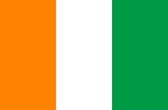
Côte d’Ivoire
Please note that if the Foreign, Commonwealth and Development Office have advised against all (or all but essential travel) to your destination, we cannot provide cover.
Click here to visit the FCDO's Foreign Travel Advice webpage.
- Intro
- Geography
- Travel
- Embassies & Visas
- Currency
- Health
Quick Facts
Official name: Republic of Côte d’Ivoire
Capital city: Yamoussoukro
Official language: French, Dioula, Baoulé, Bété, Senufo, Agni
Population: Around 28 million
Currency: West African CFA franc (XOF)
Time zone: GMT+0
Driving side: Right
Climate: Tropical wet and dry, with two rainy seasons (May–July and September–November) and two dry seasons. Coastal areas are humid, while inland regions are hotter and less humid.
Côte d’Ivoire, often known internationally as Ivory Coast, is a vibrant West African nation combining lush landscapes with a dynamic cultural scene. Abidjan, the country’s largest city, serves as its economic hub, while Yamoussoukro holds the official political capital status. Famous for cocoa production, lively markets, and a growing arts and music culture, Côte d’Ivoire is steadily regaining popularity as a destination after years of political unrest.
Côte d’Ivoire shares borders with Liberia, Guinea, Mali, Burkina Faso, and Ghana, with a long Atlantic coastline along the Gulf of Guinea. The landscape ranges from coastal lagoons and beaches to savannahs and forests inland. The western highlands feature Mount Nimba, rising to 1,752 metres. Natural hazards include seasonal flooding, coastal erosion, and occasional outbreaks of drought in the north.
Abidjan’s Félix Houphouët-Boigny International Airport is the main gateway into the country, with flights connecting to Europe, Africa, and the Middle East. Road infrastructure has improved in recent years, but rural routes can be poor, especially during the rainy seasons. Taxis and shared minibuses (gbakas) are common in cities. Tourism is growing, with attractions including the Basilica of Our Lady of Peace in Yamoussoukro, national parks such as Taï and Comoe, and lively music and dance festivals. Visitors should remain cautious, particularly outside major cities, due to varying security conditions.
All visitors need a valid passport. Most travellers require a visa, though citizens of ECOWAS countries and a few other nations are exempt. Visas can often be arranged online in advance or purchased on arrival for short stays. The UK has an honorary consulate in Praia, with formal consular assistance provided through the British Embassy in Dakar, Senegal.
The currency is the West African CFA franc (XOF), which is pegged to the euro. ATMs are increasingly available in Abidjan and larger towns, though less so in rural areas. Credit cards are accepted in major hotels and some restaurants, but cash is recommended for day-to-day use. Foreign currency, particularly euros and US dollars, can be exchanged easily in banks and official bureaux de change.
Healthcare in Abidjan is of a reasonable standard, with private clinics offering better facilities than public hospitals. Outside the capital, medical provision is very limited. Comprehensive travel insurance, including evacuation cover, is essential. Vaccination against yellow fever is mandatory for entry, and travellers should also be up to date with routine immunisations and consider hepatitis A, typhoid, and meningitis vaccines. Malaria is a year-round risk, so antimalarial medication and mosquito precautions are necessary. Tap water is not considered safe to drink, and bottled water is advised. While Côte d’Ivoire did not experience confirmed Ebola cases during the West African outbreak, health checks at airports and land borders are common.