
Need help?
UK Customer Services0330 880 3600*
Open Monday to Friday 9:00am to 5pm, Saturday 8:30am to 4pm and closed Sundays.
*Calls are recorded for training and quality purposes.
Go back to:
All Country Guides
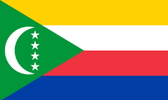
Comoros
Please note that if the Foreign, Commonwealth and Development Office have advised against all (or all but essential travel) to your destination, we cannot provide cover.
Click here to visit the FCDO's Foreign Travel Advice webpage.
- Intro
- Geography
- Travel
- Embassies & Visas
- Currency
- Health
Quick Facts
Official name: Union of the Comoros
Capital city: Moroni
Official language: Comorian, Arabic, French
Population: Around 1 million
Currency: Comorian franc (KMF)
Time zone: GMT+3
Driving side: Right
Climate: ropical, with a hot, humid rainy season from November to April and a cooler dry season from May to October.
The Comoros is a small island nation in the Indian Ocean, nestled between Madagascar and the coast of Mozambique. Sometimes called the “Perfume Islands” for its production of ylang-ylang and other aromatic plants, it offers volcanic landscapes, coral reefs, and an unhurried pace of life. While less developed for tourism than nearby Mauritius or the Seychelles, the Comoros rewards visitors with pristine beaches, unique culture, and warm island hospitality.
The archipelago consists of three main islands - Grande Comore (Ngazidja), Anjouan (Nzwani), and Mohéli (Mwali) - plus several smaller islets. Mount Karthala, an active volcano on Grande Comore, is the country’s highest point at 2,361m. The terrain is rugged and volcanic, with fertile soils supporting agriculture, especially vanilla and cloves. Coral reefs and marine life thrive offshore, making the islands appealing to divers. Natural hazards include cyclones during the wet season and volcanic activity.
The Comoros’ main gateway is Prince Said Ibrahim International Airport near Moroni, with flights to East Africa, Madagascar, and occasional links to Europe and the Middle East. Domestic flights and ferries connect the islands, though services can be irregular. Roads are basic but improving; driving requires caution, especially in rural areas. Tourism is modest but growing, centred on Moroni’s medina, hiking Mount Karthala, exploring spice plantations, and enjoying the quiet beaches. Facilities are limited, so visitors should not expect large-scale resorts.
Most travellers need a visa, which is typically available on arrival at the airport or port for short stays. Passports must be valid for at least six months, and proof of onward travel may be required. The Comoros has limited diplomatic representation abroad, so visitors should check entry requirements before travel. The French Embassy in Moroni often provides limited consular assistance for EU nationals.
The Comorian franc (KMF) is pegged to the euro, which is widely accepted for exchange. Banking services are limited, and ATMs are only available in the capital. Credit cards are rarely accepted outside of larger hotels, so travellers should carry sufficient cash. Local markets and small businesses operate almost entirely in cash.
Healthcare facilities are basic, with hospitals in Moroni and Anjouan offering limited services. For serious illness or injury, evacuation to Reunion or Nairobi is usually necessary. Malaria is present year-round, so prophylaxis is strongly recommended, along with mosquito precautions. Other risks include water-borne diseases and poor sanitation in some areas. Bottled or boiled water should be used, and vaccinations for hepatitis A, typhoid, and yellow fever (certificate required if arriving from a risk area) are advised. Comprehensive travel insurance with medical evacuation cover is essential.


