Need help?
UK Customer Services0330 880 3600*
Open Monday to Friday 9:00am to 5pm, Saturday 8:30am to 4pm and closed Sundays.
*Calls are recorded for training and quality purposes.
Go back to:
All Country Guides
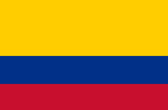
Colombia
Please note that if the Foreign, Commonwealth and Development Office have advised against all (or all but essential travel) to your destination, we cannot provide cover.
Click here to visit the FCDO's Foreign Travel Advice webpage.
- Intro
- Geography
- Travel
- Embassies & Visas
- Currency
- Health
Quick Facts
Official name:Republic of Colombia
Capital city: Bogotá
Official language: Spanish
Population: Around 53 million
Currency: Colombian peso (COP)
Time zone: GMT-5
Driving side: Right
Climate: Tropical along the coasts, temperate in the highlands, and cooler in the mountains. Bogotá has a spring-like climate year-round with mild days and cool nights.
Colombia is one of South America’s most diverse nations, known for its dramatic landscapes, colonial towns, and vibrant culture. From the Amazon rainforest to Andean peaks, Caribbean beaches, and bustling cities, it offers a rich mix of nature and heritage. Bogotá is the political and cultural capital, Medellín is celebrated for its innovation, and Cartagena enchants visitors with its walled old town. Coffee plantations, salsa dancing, emerald mines, and Gabriel García Márquez’s magical realism all form part of the Colombian identity. Despite past struggles with security, the country is increasingly popular with travellers seeking adventure, history, and warmth.
Colombia sits at the crossroads of Central and South America, bordered by Venezuela, Brazil, Peru, Ecuador, and Panama. It is unique in having coasts on both the Pacific Ocean and the Caribbean Sea, giving it extraordinary biodiversity. The Andes split into three mountain ranges here, while the Amazon basin covers much of the south. The highest point is Pico Cristóbal Colón (5,775m), rivalled by the nearby Pico Simón Bolívar. Colombia’s geography makes it prone to earthquakes, volcanic activity, and occasional droughts, but also provides fertile land for coffee, bananas, and flowers.
Air travel is the main way of moving around Colombia due to its size and mountainous terrain. El Dorado International Airport in Bogotá is the main hub, with Medellín, Cali, and Cartagena also well connected. Domestic flights are common and often the most efficient option. Long-distance buses link cities, but road travel in rural areas carries security risks. Inside cities, taxis and ride-hailing apps are widely used, though unlicensed taxis should be avoided. Popular destinations include the Caribbean coast, Medellín’s modern skyline, Bogotá’s Gold Museum, and the “Coffee Triangle” region.
British citizens do not need a visa for short stays of up to 90 days, though extensions may be available. Passports must be valid for at least six months on entry. Visitors should carry proof of onward travel and may be asked to show funds for their stay. Some regions, especially near borders, require additional permits due to security concerns. The Colombian Embassy in London can provide visa and consular services, while the British Embassy in Bogotá assists UK nationals.
The Colombian peso (COP) is the official currency, with notes in denominations of 1,000 to 100,000 pesos. ATMs are common in major cities and accept international cards, though transaction fees can apply. US dollars are the easiest foreign currency to exchange, and travellers should use authorised exchange houses rather than street changers. Credit cards are widely accepted in hotels, restaurants, and shops in urban areas, but cash is still important in smaller towns. Traveller’s cheques are less common.
Healthcare standards in Bogotá, Medellín, and other large cities are generally good, with modern hospitals and English-speaking doctors available. However, rural areas have limited facilities. Travellers are advised to carry comprehensive medical insurance that includes evacuation cover. Water quality varies, so bottled or boiled water is safest. Recommended vaccinations include hepatitis A, typhoid, and yellow fever, particularly for visits to Amazonian regions. Malaria, dengue, and Zika virus are present in some areas, especially at lower altitudes. Colombia’s varied climate also means travellers should prepare for altitude sickness in Bogotá and other highland cities.