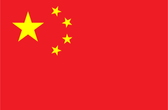
China flag China
Personal relationships in business are critical. The Chinese like to deal with "old friends," and it is important for exporters, importers, and investors to establish and maintain close relationships with their Chinese counterparts and relevant government agencies. It is equally important that American exporters encourage strong personal relationships between their Chinese agents or distributors and the buyers and end-users. A web of strong personal relationships will help ensure smoother development of business in China. Foreign companies are not permitted to directly engage in trade in China, with the exception of the direct marketing of a portion of the goods that they manufacture in China. Accordingly, exporters need to use a domestic Chinese agent for both importing into China and marketing within China. Only those trading companies authorized by the central government to handle exports and imports are permitted to sign import and export trade contracts. Over 10,000 Chinese firms have that authority. Some trading firms have begun to represent foreign manufacturers, in arrangements similar to a "manufacturers representative," but these are still in the minority. With careful selection, training and constant contact, exporters can obtain good market representation from a Chinese trading company, many of which are authorized to deal in a wide range of commodities. Some of the larger Chinese companies have overseas offices in countries around the world, as well as multiple branches in China. However, given transportation and communication difficulties, as well as regional peculiarities, most of these trading companies cannot give diversified coverage throughout China. In addition to the trading companies, China is witnessing an explosion in local sales agents who handle internal distribution and marketing. These firms do not necessarily have import/export authority. They may be representative offices of Hong Kong or other foreign trading companies, or domestic Chinese firms with regional or partial national networks, under supervision of the Ministry of Internal Trade. Given China's size and diversity, as well as the lack of agents with wide-reaching abilities, it makes sense to hire several agents to cover different areas, and to be cautious when giving exclusive territories. China can be divided roughly into at least five major regions: the South (Guangzhou), the East (Shanghai), the Beijing-Tianjin region, Central China and the Northeast. A locally incorporated equity or cooperative joint venture with one or more Chinese partners, or a wholly foreign-owned enterprise (WFOE), may be the final step in developing markets for a company's products. Domestic production avoids import restrictions -- including relatively high tariffs -- and provides firms with greater control over both intellectual property and marketing. The role of the Chinese partner in the success or failure of a joint venture cannot be over-emphasized. A good Chinese partner will have the connections to help smooth over red tape and obstructive bureaucrats; a bad partner, on the other hand, can make even the most promising venture fail. Common investor complaints concern conflicts of interest (e.g., the partner setting up competing businesses), bureaucracy and violations of confidentiality. Companies should bear in mind that joint ventures are time-consuming and resource-demanding, and will involve constant and prudent monitoring of critical areas such as finance, personnel and basic operations in order for them to be a success. Some companies prefer to establish a WFOE rather than a joint venture, with a view to retaining greater management control, due to concerns over intellectual property rights (IPR) protection, desire for simplicity, or for other reasons of corporate policy. The law on WFOEs requires that they either provide advanced technology or be primarily export-oriented, and restricts or prohibits them in a number of service and public utility sectors. However, an increasing number of companies find WFOEs, which now account for roughly 20% of all foreign-invested enterprises, to be a viable entry vehicle to the China market, taking much less time and money to set up than a joint venture. Chinese law requires representative offices and foreign-invested enterprises to retain the services of accountants registered in China to prepare for official submission of annual financial statements and other specified financial documents. To date, only Chinese accountants and joint-venture accounting firms may provide these services. However, all the major international public accounting firms have offices in China and operate a thriving practice providing services to foreign firms, from advice on tax matters to assistance in setting up accounting systems and preparation of feasibility studies. Only attorneys licensed in China may appear in court and advise on questions of Chinese law. At present, foreigners are not permitted to qualify to practice Chinese law, nor are foreign law firms permitted to form joint ventures with Chinese lawyers. Registered foreign law firms in China are restricted to advising on the law of their own jurisdictions. Nonetheless, many international law firms, which have had years of experience in doing business in China, are an invaluable source of advice and guidance in setting up ventures, drafting agreements and resolving disputes. Here are some ways in which one can conduct business with culturally acceptable decorum while visiting China: Mandarin, also known as Putonghua or Common Speech, is the official spoken language in China. Depending on where in China you are doing business, other major dialects include Cantonese, Shanghainese, Fukienese, and Hakka. While it isn't expected that Westerners doing business in China should have a mastery of the given language, you'll gain the respect of your Chinese counterparts by making an attempt to utter at least a few of the simplest phrases or words. Though some westerners think they are workaholics, their work ethic pales by comparison to that of the typical Chinese. Until recently, the official workweek in China was six longer-than-normal days (closed Sundays) with no break for lunch. Today, however, many businesses keep 8 a.m. to 5 p.m. hours, with a break from noon to 1:30 p.m. During that time, the enterprises may totally shut down so that employees can go home for lunch a quick xiuxi (a short nap), so plan accordingly when scheduling business appointments or trying to phone a company to make an appointment. To function well in China it is important to understand the principle of "saving face." In China, an individual's reputation and social standing is based on this complex concept. For example, by turning down a dinner invitation to a Chinese associate's home, you are causing that individual to "lose face" simply because you are not available. To save his or her face, as well as to save your own, you must apologize for not being able to accept the invitation, then propose an alternative plan that is palatable to the person who has extended the invitation. Causing someone to lose face, even though unintentional, is a sure way to put a quick halt to business negotiations with not only one individual, but most likely with his or her entire firm as well. Exchanging business cards in China is like shaking hands: It's part of proper business etiquette. If you can, before venturing overseas, have your business cards printed in both English and Chinese. Otherwise, ask your hotel concierge or hotel business center manager if he or she can take care of having your cards reprinted in both languages (preferably using the local dialect). When you present your bilingual business card to a prospective client, make sure the Chinese translation side of your card is facing the recipient. Then, holding the upper corners of the card with the thumb and forefinger of both hands, offer your card to that person. When he or she gives you a business card, receive the card in the same way as you gave yours, and be sure to examine its contents before putting it carefully in your card case for future reference. Simply stashing the card as soon as you receive it will cause your contact to immediately lose face, and will demonstrate ignorance. The Chinese see haste as a sign of suspicious behavior, so be patient in your business negotiations. Business dealings in this Asian country usually take time (and a few visits) before they can be worked out. Think and then speak if you're in conference with a member of the Chinese community. Also, learn to be a good listener. A quick way to lose credibility with your Chinese counterpart is to make an inaccurate statement. Emphasize company teamwork as opposed to individual business plans. The Chinese place a strong emphasis on the need to work together as if you are each part of a well-oiled machine. They tend to identify with the ideas of a firm as a whole, rather that those ideas of just one business associate.
While the crime rate in China is increasing, it remains generally lower than in most western countries. Crimes are usually nonviolent involving petty thefts, with pickpockets and purse-snatchers accounting most incidents targeting foreigners. To cope with the increases in the violent crime that does occur, the Chinese judicial system took a step in early February, when they executed 8 violent criminals after their hearing. It is the custom of the Chinese to perform executions just prior to the Chinese New Year. A firing squad is the prescribed form of execution and frequently a single bullet is fired into the head of the condemned, after which his family receives a bill for the cost of the bullet. Except for Hong Kong, police are only moderately effective in providing assistance throughout the country. (Hong Kong can boast its police force is among the most effective in the world.) Most police have only a little formal education and their equipment and training are below those standards set by American enforcement agencies. Response to an emergency may take between 15 and 30 minutes. A rash of explosions in January 1999 took place in parts of central and southern China. These explosions are unusual in China, and so far have been confined to a few places such as Wuhan and Guangzhou. The risk to foreigners because of these explosions is small. Crowded public areas such as hotel lobbies, bars and restaurants, or public transportation and tourist sites are major risk areas that account for almost all of the reported crime where thefts have occurred. Travelers should avoid using unmarked taxis. Legal taxis are clearly marked, are metered, and should have the driver's identification clearly displayed. Identification cards and travel documents, such as passports and airline tickets, should be safeguarded. China has recently introduced a law that states all foreign nationals must have identifications papers on them at all times and may be stopped and asked to produce them by police on the street. Visitors should carry photocopies of these documents, as foreign nationals have been detained in the past. The photocopies should be kept in a zippered pocket or fanny pack while the originals should be kept in a hotel safe deposit box.
China has 2552 tourist hotels with 386,000 rooms, among which 1028 hotels have been star-graded according to international standards. Most of the hotels have comfortable and convenient facilities including air-conditioning and private bathrooms, Chinese and Western restaurants, coffee shops, bars, banqueting halls, conference rooms, multi-function halls, ballrooms, swimming pools, bowling alleys, beauty parlors, massage rooms, saunas, clinics and ticket booking offices. Some even include shopping and business malls, banks and post offices. Security at Chinese hotels ranges from excellent at better hotels to poor. Better hotels in China include the following: Beihai: Furama - Shangri-La Beijing: China World - Hilton - Holiday Inn Crown Plaza - Shangri-La - Mövenpick - Traders - Hawaii Oriental Beijing Hotel Changchun: Shangri-La Dalian: Holiday Inn Guangzhou: Furama - Shangri-La Nanjing: Hilton Nanjing - Jinling Hotel Shanghai: Hilton Shenzhen: Forum - Golden Lustre - Shangri-La - Sunshine Tianjin: Astor Xian: Shangri-La Golden Flower.
Telephone IDD service is available and the country code is 86. The outgoing international code: 00. Internal service is often antiquated with public telephones in hotels and shops displaying telephone unit sign. It is often easier to make international phone calls from China than it is to make calls internally. Beijing now has an automatic telex service to the US and Europe. Country code: 85. Facilities are available at main and branch post offices in larger towns and cities. A growing number of hotels offer telex and fax facilities but often only incoming and rates are generally expensive. Postal service to Europe or the US takes about a week. All postal communications to China should be addressed 'People's Republic of China'. Electricity is 220/240 volts AC, 50Hz and two-pin sockets (a few have three-pin sockets) are in use.
220 volts AC, 50Hz. Two-pin sockets and some three-pin sockets are in use. However, most 4 of 5 star hotels are wired for the use of 110 volt appliances.
A,I,G
Chinese cuisine has a very long history and is renowned all over the world. Cantonese (the style the majority of Westerners are most familiar with) is only one regional style of Chinese cooking. There are eight major schools of Chinese cuisine, named after the places where they were conceived: Anhui, Fujian, Guangdong, Hunan, Jiangsu, Shandong, Sichuan and Zhejian. For a brief appreciation of the cuisine, it is possible to break it down into four major regional categories:

Northern Cuisine

Beijing food has developed from the Shandong school of cuisine.

Specialties:

Peking Duck, which is roasted in a special way, and eaten in a thin pancake with cucumber and a sweet plum sauce.

• Mongolian Hotpot, a Chinese version of fondue. It is eaten in a communal style and consists of a central simmering soup in a special large round pot into which is dipped a variety of uncooked meats and vegetables, which are cooked on the spot.

• A cheap and delicious local dish is shuijiao, which is pasta-like dough wrapped round pork meat, chives and onions, similar in idea to Italian ravioli. These can be bought by the jin (pound) in street markets and small eating houses, and are a good filler if you are out all day and do not feel like a large restaurant dinner. It should, however, be noted that in the interests of hygiene, it is best to take your own chopsticks.

Southern Cuisine

Guangdong (Cantonese) food is famous for being the most exotic in China. The food markets in Guangzhou are a testimony to this, and the Western visitor is often shocked by the enormous variety of rare and exotic animals that are used in the cuisine, including snake, dog, turtle and wildcat.

Specialties:

Dim sum served at lunch.

• Shrimp wonton noodle soup.

Eastern Cuisine

Shanghai and Zhejiang cooking is rich and sweet, often pickled. Noted for seafood, hot and sour soup, noodles and vegetables.

Specialties:

La Mian (pulled noodles) served with curry beef soup.

Xiao Long Bao (small steamer bun), pan fried pork buns eaten dipped in vinegar.

Western Cuisine

Sichuan and Hunan food is spicy, often sour and peppery, with specialties such as diced chicken stirred with soy sauce and peanuts, and spicy doufu (beancurd).

Specialties:

• Sweet and sour chicken.

• Orange beef.

National Drinks:

• One of the best-known national drinks is maotai, a fiery spirit distilled from rice wine.

• Local beers are of good quality, notably Qingdao, which is similar to German lager.

• There are now some decent wines, which are produced mainly for tourists and export, such as Qingdao white wine.

Nightlife

Visitors can follow itineraries drawn up in advance, when sampling the nightlife of the larger cities, including a selection of prearranged restaurant meals and visits to Chinese opera, Chinese state circus, ballet and theater. Local Chinese will tend to only drink socially with a formal meal so bars and nightclubs will generally only be found in the more cosmopolitan cities and major towns. Karaoke (written OK+ on Chinese signs) is a popular form of evening entertainment.