
Need help?
UK Customer Services0330 880 3600*
Open Monday to Friday 9:00am to 5pm, Saturday 8:30am to 4pm and closed Sundays.
*Calls are recorded for training and quality purposes.
Go back to:
All Country Guides
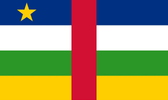 Central African Republic
Please note that if the Foreign, Commonwealth and Development Office have advised against all (or all but essential travel) to your destination, we cannot provide cover.
Click here to visit the FCDO's Foreign Travel Advice webpage.
- Intro
- Geography
- Travel
- Embassies & Visas
- Currency
- Health
Quick Facts
Official name:Central African Republic
Capital city: Bangui
Official language: French, Sangho
Population: Around 6.3million
Currency: Central African CFA franc (XAF)
Time zone: GMT+1
Driving side: Right
Climate: Hot and tropical, with a long rainy season from May to October and a dry season dominated by dusty Harmattan winds from December to March
The Central African Republic (CAR) is a landlocked country at the heart of Africa, rich in natural resources but challenged by decades of instability. Despite political fragility, the country is home to striking natural beauty, from savannah and dense forests to rivers and waterfalls. Visitors are rare, but CAR offers unique wildlife experiences, particularly in Dzanga-Sangha National Park, where forest elephants, lowland gorillas and rare birdlife can be found.
CAR shares borders with Cameroon, Chad, Sudan, South Sudan, the Democratic Republic of the Congo, and the Republic of the Congo. Its terrain is mostly flat to rolling plateau, with scattered hills and the country’s highest point, Mont Ngaoui, reaching 1,420 metres. The Oubangui River, which forms part of the southern boundary, is an important transport route. Natural hazards include flooding during the rainy season and dust storms during the dry months.
Infrastructure in the Central African Republic is extremely limited. Bangui M’Poko International Airport is the main gateway, though connections are few. Roads are poor, and travel outside Bangui is often dangerous due to banditry and armed groups. Even within the capital, services are unreliable, and power outages are common. Tourism is minimal, and most visitors are aid workers, journalists, or business travellers in the resource sector. The Foreign, Commonwealth & Development Office (FCDO) currently advises against all travel to much of the country due to security risks.
All visitors require a visa, which must be obtained before arrival. A passport valid for at least six months and a yellow fever vaccination certificate are mandatory. The Central African Republic has embassies in Paris and Washington D.C., while the UK does not have an embassy in Bangui. British nationals in need of assistance are advised to contact the British Embassy in Cameroon.
The official currency is the Central African CFA franc (XAF), which is pegged to the euro and shared with several other countries in the region. Cash is essential, as credit cards are rarely accepted and ATMs are unreliable or non-existent outside the capital. Banking services are limited, and carrying euros is generally the easiest option for exchange.
Medical facilities in the Central African Republic are very poor, with shortages of staff, supplies, and medicines. Serious illness or injury will usually require evacuation to another country. Risks include malaria, yellow fever, cholera, and other water- and insect-borne diseases. A yellow fever vaccination certificate is required for entry, and travellers are strongly advised to take anti-malarial medication and use insect repellent. Tap water is not safe to drink, and only bottled or boiled water should be used. Comprehensive medical and evacuation insurance is essential.