Need help?
UK Customer Services0330 880 3600*
Open Monday to Friday 9:00am to 5pm, Saturday 8:30am to 4pm and closed Sundays.
*Calls are recorded for training and quality purposes.
Go back to:
All Country Guides
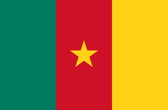
Cameroon
Please note that if the Foreign, Commonwealth and Development Office have advised against all (or all but essential travel) to your destination, we cannot provide cover.
Click here to visit the FCDO's Foreign Travel Advice webpage.
- Intro
- Geography
- Travel
- Embassies & Visas
- Currency
- Health
Quick Facts
Official name: Republic of Cameroon
Capital city: Yaoundé
Official language: French, English. and 20+ major African language groups
Population: Around 28 million
Currency: Central African CFA franc (XAF)
Time zone: GMT+1
Driving side: Right
Climate: Varied - humid coastal regions, cooler grasslands inland, and hot, arid conditions in the far north
Cameroon, often described as “Africa in miniature,” sits at the crossroads of Central and West Africa. With beaches, mountains, rainforests and savannahs, the country reflects almost every environment the continent has to offer. Its rich cultural diversity is matched by its natural beauty, from the vibrant coastal city of Douala to the political capital Yaoundé, and from volcanic Mount Cameroon to wildlife-rich national parks.
Cameroon shares borders with Nigeria, Chad, the Central African Republic, Equatorial Guinea, Gabon and the Republic of the Congo. Its terrain is equally varied, with low-lying coastal plains, the central Adamawa Plateau, and the imposing Mount Cameroon - West Africa’s highest peak at 4,095m. The north is semi-arid and prone to desertification, while the south is lush and tropical. Natural hazards include periodic volcanic activity and the rare but deadly release of gases from crater lakes such as Nyos and Monoun.
Most international visitors arrive via Douala or Yaoundé airports. Domestic travel can be challenging, with poor road conditions outside major cities and a high accident rate on highways. Rail services link Douala to Yaoundé and Ngaoundéré. While tourism exists - particularly for ecotourism, safaris, and trekking Mount Cameroon - security concerns mean independent travel requires caution. Visitors should avoid travel after dark and remain vigilant against petty theft, especially in urban areas.
All visitors require a visa, which should be obtained in advance from a Cameroonian embassy or consulate. A passport valid for at least six months is essential, and proof of a yellow fever vaccination is mandatory for entry. The Cameroonian High Commission in London and the embassy in Washington D.C. provide consular services.
The official currency is the Central African CFA franc (XAF), shared with several neighbouring countries and pegged to the euro. Euros are the easiest foreign currency to exchange, though US dollars are also accepted in some places. ATMs are available in larger cities but not always reliable, and credit card use is very limited. Travellers should carry cash, particularly when travelling outside Douala and Yaoundé.
Healthcare in Cameroon is limited, with basic facilities outside of the main cities and standards generally well below those in Europe. Serious medical cases usually require evacuation. Risks include malaria, yellow fever, cholera and other insect- and water-borne diseases. Travellers should take precautions such as insect repellents, bottled or boiled water, and up-to-date vaccinations. A yellow fever certificate is mandatory. Comprehensive medical travel insurance with evacuation cover is strongly recommended.