Contact Us   |   FAQ   |   Site Map
Direct Travel Insurance
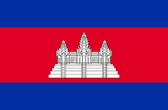
Cambodia flag Cambodia
Cambodia was governed from Hanoi as part of French Indo-China from 1864 until 1954 when King Norodom Sihanouk, who had been placed on the throne by the French in 1941, achieved full independence. He ruled Cambodia until 1970, when Marshal Lon Nol ousted him in a coup. Prince Sihanouk, as he was known from 1955 to 1993, then linked up with the Khmer Rouge, an extreme left-wing party, led by Pol Pot. Khmer Rouge forces, led by Pol Pot, captured Phnom Penh in 1975 after years of guerrilla warfare. The Khmer Rouge immediately abolished money and private property, and ordered city-dwellers into the countryside to cultivate the fields. Over 1.5 million displaced people died in the following three years from execution or enforced hardships. A 1978 Vietnamese invasion drove the Khmer Rouge into the countryside and touched off 13 years of fighting. UN-sponsored elections in 1993 helped restore some semblance of normalcy, as did the rapid diminishment of the Khmer Rouge in the mid-1990s. A coalition government, formed after national elections in 1998, brought renewed political stability and the surrender of remaining Khmer Rouge forces. Only now is Cambodia beginning to put the mechanism in place to bring those responsible for the "killing fields" to justice. Cambodia and the UN have agreed to set up a tribunal to try the surviving leaders of the genocide years. Cambodia is one of the poorest countries in the world and it relies heavily on aid. Foreign donors have urged the government to clamp down on rampant corruption. Subsistence farming employs 70% of the workforce, with the Mekong River providing fertile, irrigated fields for rice production. Well over half of Cambodia is forested, but illegal logging is robbing the country of millions of dollars of badly-needed revenue. The environment is also suffering, with topsoil erosion and flooding becoming prevalent. Tourism is important to the economy. The Angkor temple complex, built between the ninth and 13th centuries by Khmer kings, is a UN heritage site and a big tourism draw. Cambodia's kings once held semi-divine status; today, the monarch's role is mainly ceremonial. Former king Norodom Sihanouk abdicated due to poor health; present King Norodom Sihamoni was sworn in as monarch on October 29, 2004. Prime Minister Hun Sen, one of the world's longest-serving prime ministers, has been in power in various coalitions since 1985. He was re-elected by parliament in July 2004 after nearly a year of political stalemate. In 1997 he seized power from his then co-prime minister, Prince Ranariddh. Since then, some Western countries have said his rule has become increasingly authoritarian. He joined the Communist Party in the late 1960s and, for a time, was a member of the Khmer Rouge. He has denied accusations that he was once a top official within the movement, saying he was only an ordinary soldier. During the Pol Pot regime in the late 1970s he joined anti-Khmer Rouge forces based in Vietnam.
During the past five years Cambodia has enjoyed much more political stability and territorial unity than for decades, with a greater sense of security amongst the general population. The government improved its image by successfully staging a number of high-level international meetings, but then suffered a serious blow as a result of anti-Thai riots in January 2003 when the Thai Embassy and much Thai-owned property were destroyed by rioters. The government is approaching the handling of the Khmer Rouge, who effectively collapsed as a significant threat in 1997/8, with greater confidence and in June 2003 signed an agreement with the UN on a tribunal for Khmer Rouge leaders responsible for human rights abuses during their rule (1975-1979). A legislative amendment was passed by the Cambodia parliament in October allowing the formation of the Khmer Rouge Tribunal; discussions continue with the UN over key issues such as funding. While there are no direct terrorist threats at present to travelers to Cambodia, there have been serious attacks in other parts of South East Asia. In neighboring Indonesia, Westerners were killed and injured following the terrorist attacks in Bali (October 2002 and October 2005) and Jakarta (August 2003 and September 2004). Hostage-taking, normally for money, is not uncommon in the war-scarred nation, which is still awash with weapons from decades of civil war. In June 2005, 28 children were taken hostage by four gunmen at the International School of Siem Reap. The siege ended on the same day, with the death of one child. The hostage-takers were all detained. They had demanded $30,000 in cash, weapons including grenade launchers and AK-47 assault rifles, and a 12-seat minivan. Negotiators gave them the cash and van but refused to let them leave the school with any of their hostages. Six hours after the siege began, gunmen killed one child when authorities declined to meet all of their demands, and police then raided the building. Police in the town said that the leader of the gang had intended to kill the two children of his former South Korean employer, allegedly because of a violent dispute. The hostage-takers failed to find their targets in the raid on the school, and instead took a class hostage. There have been a small number of grenade/bomb attacks, although most have been linked to business or personal disputes. There is no evidence to suggest that Western interests or nationals have been the targets of these attacks. However, there is a danger foreigners might get caught up in any further attacks. There have been attacks against ships in the South China Sea and surrounding seas. Mariners should be vigilant; reduce opportunities for theft; establish secure areas onboard; and report all incidents to the coastal and Flag State authorities. Avoid expressing forcible opinions on Cambodian politics or culture, and keep away from large gatherings, demonstrations and political meetings. The formation of a coalition government in 2004 eased political tensions considerably, but nonetheless, be aware that Cambodian political activities have turned violent in the past. In November 2000, an anti-government group based in the U.S led an attack against government buildings in Phnom Penh. In January 2003, there were anti-Thai riots, during which the Royal Embassy of Thailand and Thai commercial establishments were attacked. While the current situation is relatively stable, the possibility for politically motivated violence remains. Cambodia remains heavily affected by landmines and unexploded ordnance. Mined areas are frequently unmarked. Do not stray off main routes in rural areas, including around temple complexes. Roads and vehicles are typically in poor condition. Due to the high number of road accidents involving tourists on motorcycles in Siem Reap, the local police have banned rental outlets from hiring motorcycles to tourists. Avoid traveling as a passenger by motorcycle taxi because of poor road and vehicle maintenance, the low level of driver skills and the risk of crime (see “Crime” below). Emergency services are spare (see “Health”). Seasonal flooding occurs both in Phnom Penh and the rest of Cambodia starting at the end of July or early August and continuing until November. Travel to some provinces can be seriously disrupted during this time. Accidents have occurred due to overloaded or poorly maintained boats on all routes. Even modern vessels may be overcrowded and life-vests and other safety equipment are not routinely provided. Boats operating on Cambodia’s inland waterways are also susceptible to robbery by armed gangs. Boat travel on rivers becomes difficult in the dry season (March – May). Be aware of concerns over safety and maintenance standards of aircraft owned by local airlines operating internal flights (as evidenced by a November 2005 crash of a Royal Phnom Penh Airways plane). These flights are often cancelled or rescheduled at short notice. There may also be safety risks associated with travel on Cambodian government aircraft, including those operated by the Royal Cambodian Armed Forces. Flights out of Phnom Penh are limited and often very full; reconfirm your return flight directly with the carrier 24 hours before departure. Ensure that no one has access to your luggage, as penalties for drug offenses are severe. Do not take photographs in or near airports or military bases. Ask permission before taking pictures of members of the public especially monks and other religious figures. When entering religious sites it is a courtesy to dress in appropriate clothing, avoiding shorts and torn clothing. Be prepared to remove shoes when entering temples and private accommodation. Limited ATM facilities are available in Phnom Penh. However, you should not rely on these, and take enough cash or travelers cheques to fund your trip. Credit cards are accepted at a limited number of hotels and restaurants in Phnom Penh and larger cities. Most transactions are conducted in cash (US Dollars).